
Smart goal setting uses the SMART framework: Specific, Measurable, Achievable, Relevant, Time-bound. All 5 criteria. The vague-to-SMART rewrite is the highest-use move (‘save more money’ becomes ‘save $5,000 to an emergency fund by December 31 via $420/month auto-transfer’). Quarterly check-ins keep January goals alive.
It is the third Sunday of January, and the resolution that felt so clear on New Year’s Day already feels uncertain. The phrase ‘save more money’ has no edges. There is no number to hit, no date to hit it by, no monthly mechanism to make it happen.
The vagueness is doing the quiet work of unraveling the goal before February even arrives.
This is where the SMART framework earns its keep. Specific, Measurable, Achievable, Relevant, Time-bound. Five small criteria that turn a fuzzy intention into a goal your brain can actually carry through to December.
Asana, Atlassian, and SAMHSA all land on the same five in their 2026 guidance, and the vague-to-SMART rewrite covered in the next few sections is the single move that saves the most January resolutions from quietly dissolving by March.
Want the year-long planner that supports the SMART goal cycle?
The Self-Care & Wellness Planner is the year-long companion built around the quarterly check-in cadence. It lives here.
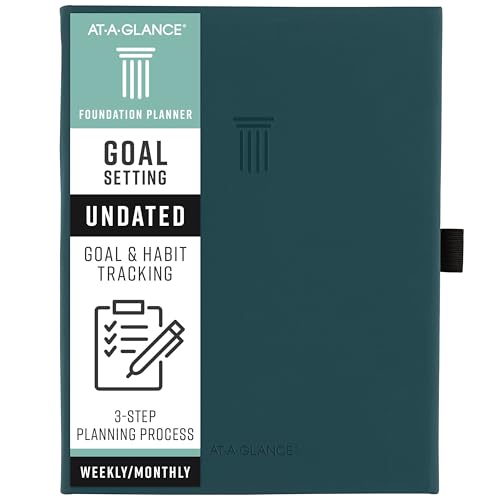
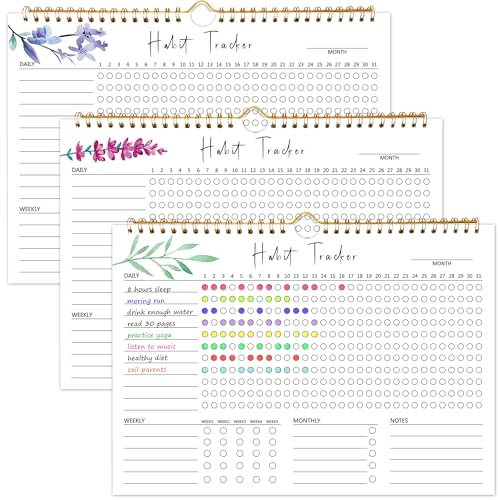
Recommended Tools for SMART Goal Setting
A short stack of physical anchors keeps the SMART goal work on track. The five recommendations are the ones most consistently mentioned in goal-setting research.




Recommended reads:
- Mindset Shifts for the New Year That Actually Stick
- Financial Resolutions That Create Real Change With Money
- Healthy Habits for the New Year That Feel Easy to Keep
- How to Build a Growth Mindset That Changes Your Year
- A 5 Minute Mindset Routine to Rewire Your Thoughts
- how to set goals and achieve them with a real plan
- goal mapping ideas for creating a visual plan
- goal setting template to organize the year
- how to make a vision board that actually works
- new year productivity tips that hold past january
- new year journaling prompts for a more intentional reset
- plan your year for a more focused twelve months
The SMART Framework in Plain Terms
All Five Criteria, Not Just One or Two
SMART is Specific, Measurable, Achievable, Relevant, Time-bound. The framework only works when all five are present. A goal that is Specific and Measurable but not Time-bound drifts indefinitely. A goal that is Time-bound but not Achievable usually creates failure. The five criteria are a checklist; missing one means the goal is not yet SMART.
Why SMART Beats Vague Resolutions
Vague resolutions fail because the brain has nothing to grip. ‘Save more money’ produces no specific action this week. ‘Save $5,000 by December 31 via $420 monthly auto-transfer’ produces an immediate action (set up the transfer) and a weekly check (did the transfer happen, is the balance on pace).
The specificity is the whole point. The weekly self care schedule covers the weekly cadence the SMART goal lives inside.
Specific: State Exactly What and Why
The What
What exactly will be achieved. Not ‘get healthier’ but ‘walk 30 minutes per day five days per week.’ Not ‘read more’ but ‘read 12 books across the year, averaging one per month.’ The specificity is what separates the goal from the wish. The brain treats specific goals as actionable instructions; vague goals as aspirational background noise.
The Why
Specificity also covers the connection to the deeper reason. Why does the goal matter. The ‘why’ is what carries the goal through the hard weeks. Atlassian’s 2026 SMART guide frames it as ‘connecting the goal to the underlying strategy or value.’ For personal goals, the value is usually family, freedom, security, contribution, or growth.
Measurable: Add a Number That Can Be Tracked
The Number Makes the Goal Auditable
A measurable goal can be checked against reality at any point. ‘Run a marathon’ is measurable because finishing 26.2 miles is the metric. ‘Be more patient’ is not measurable. The presence of a number is what allows the quarterly check-in to actually function.
How to Pick the Right Metric
The metric should be a direct indicator of the goal, not a proxy. ‘Lose 20 pounds’ uses weight as the metric, which is genuinely measurable. ‘Get stronger’ is harder to measure unless rephrased as ‘deadlift 200 pounds by Q3.’ Pick metrics that reflect what actually changed, not what feels close to it.
The journaling for emotional clarity guide covers the deeper measurement work for goals where the change is internal.
Achievable: Within Reach Given Current Resources
Ambitious is OK; Unattainable is Not
The Achievable criterion does not mean easy. It means within reach given current skills, resources, and schedule. Saving $5,000 on a $40,000 income is achievable with discipline. Saving $50,000 on the same income is not, and setting the unattainable goal usually creates demoralization by March.
The Resource Audit
Before finalizing the goal, audit the resources the goal requires. Time. Money. Skills currently held. Skills that would need acquiring. Support network. If any of those resources is genuinely missing, the goal needs either resource-building as a prerequisite or scaling down to match the current resources.
Relevant: Tied to Something That Matters
Why Relevant Matters Most for January Goals
Goals that are unconnected to a deeper personal value fade by mid-February. Goals that are tied to a specific value (family stability, professional growth, physical resilience) survive longer because the value provides the reason to push through the hard weeks.
The Asana 2026 guide phrases this as ‘tie it back to your bigger objectives or strategy, so it’s worth the effort.’
The One-Sentence Relevance Test
Write one sentence: ‘This goal matters because [deeper reason].’ If the sentence is hard to write or feels generic, the goal is probably not relevant enough to survive January motivation. Refine until the sentence is specific and emotionally true. The it girl mindset guide covers the broader self-image work the relevance question sits inside.
Time-Bound: Put a Date on the Calendar
Why Deadlines Create Urgency
The Time-bound criterion is the one most often skipped. ‘Save $5,000’ is specific and measurable but has no end date. ‘Save $5,000 by December 31’ creates urgency and allows for monthly trajectory tracking ($416 per month average). The deadline transforms the goal from intention into commitment.
Sub-Deadlines for Long Goals
Annual goals benefit from quarterly sub-deadlines. The $5,000 goal becomes $1,250 by March 31, $2,500 by June 30, $3,750 by September 30, $5,000 by December 31. The sub-deadlines turn the annual goal into a series of shorter sprints that the brain can find your way around.
Vague-to-SMART Rewrites
Money Goals
Vague: ‘Save more money.’ SMART: ‘Save $5,000 to my emergency fund by December 31, 2026, via automatic transfer of $420 on the first of each month, because financial security is connected to my family’s stability.’
Health Goals
Vague: ‘Exercise more.’ SMART: ‘Walk 30 minutes per day five days per week by March 31, 2026, anchored on my morning coffee routine, because consistent movement is what sustains my energy across the year.’
Career Goals
Vague: ‘Get better at my job.’ SMART: ‘Complete the project management certification by June 30, 2026, studying 30 minutes per weeknight, because the credential opens the role I want by 2027.’
Reading Goals
Vague: ‘Read more.’ SMART: ‘Read 12 books across 2026, averaging one per month, alternating between fiction and non-fiction, because reading is what keeps my mind active outside work hours.’ The balance hustle and healing guide covers the broader sustainable-pace work the goals fit inside.
The Quarterly Check-In Cadence
Why Quarterly Beats Monthly or Yearly
Monthly check-ins are too granular for strategic recalibration. Yearly check-ins are too slow , by December, the January goal has drifted unrecognizably. Quarterly is the cadence the long-term-succeeding group uses. The 2026 Patten Financial guidance phrases it as ‘treating quarterly check-ins as non-negotiable appointments.’
The Four-Date Calendar
Last Sunday of March. Last Sunday of June. Last Sunday of September. Last Sunday of December. Twenty minutes each. Three questions: is the goal still relevant, is the trajectory on pace, what is the one specific adjustment for the next quarter.
The dates go on the calendar in January. The morning routine for the new year covers the daily anchor the quarterly system runs on top of.
Want the deeper money rewiring programme for the financial-goal versions?
The Money Mindset Makeover is the longer-form programme for the money-specific applications of the SMART framework. It is here.
Frequently Asked Questions
What is the SMART goal framework?
SMART stands for Specific, Measurable, Achievable, Relevant, Time-bound. All 5 criteria must be present for the goal to function. The framework is the dominant goal-setting tool used by Asana, Atlassian, SAMHSA, and university research groups in 2026.
How do I rewrite a vague goal as SMART?
Add specificity (what exactly), measurability (a number), achievability (within current resources), relevance (connected to a deeper value), and a deadline. ‘Save more money’ becomes ‘save $5,000 to emergency fund by December 31 via $420 monthly auto-transfer because family security matters.’
Why do most goals fail even with SMART?
Most goals that fail despite SMART framing fail at the Relevant criterion. The goal is technically specific and measurable but not connected to a deeper personal value. The one-sentence relevance test (‘this goal matters because…’) surfaces goals that look SMART but lack the motivational anchor.
How often should I check in on SMART goals?
Quarterly. Last Sunday of March, June, September, December. 20 minutes each. Three questions: is the goal still relevant, is the trajectory on pace, what is the one specific adjustment for the next quarter. Monthly is too granular; yearly is too slow.
How many SMART goals should I set?
3 to 5 for the year. More than 5 dilutes attention and drops completion rates. Fewer than 3 leaves the year feeling rudderless. The 3-to-5 range is consistent across the goal-setting research.
What if my circumstances change mid-year?
The quarterly check-in is when circumstance shifts get integrated. If a goal is no longer relevant because life shifted, retire it deliberately at the quarterly check-in rather than letting it drift. Replacing one goal with a new one is fine; drifting away from a goal without naming it is what produces the demoralization.
Key Takeaways
- SMART = Specific, Measurable, Achievable, Relevant, Time-bound. All 5 criteria must be present.
- The vague-to-SMART rewrite is the highest-use move: ‘save more money’ becomes ‘save $5,000 by Dec 31 via $420/month auto-transfer because family security matters.’
- Most goals that fail despite SMART framing fail at the Relevant criterion , not connected to a deeper value.
- Annual goals benefit from quarterly sub-deadlines: a $5,000 goal becomes $1,250 by March 31, $2,500 by June 30, etc.
- Quarterly check-ins (Mar, Jun, Sep, Dec) are the cadence the long-term-succeeding group uses; 3 to 5 goals per year is the working range.
Final Thoughts on Smart Goal Setting
Smart goal setting that actually completes is five criteria, applied honestly, with quarterly check-ins on the calendar. The vague-to-SMART rewrite is the conversion move. The relevance criterion is the one that decides whether the goal survives the third Sunday of January.
The framework is unglamorous and the discipline of using it is what separates the eight-to-ten-percent who finish from the rest.
Last update on 2026-08-15 / Affiliate links / Images from Amazon Product Advertising API