
Micro habits are tiny daily actions (under 2 minutes each) that compound across the year into measurable change. James Clear’s 1% rule: improving 1% daily compounds to roughly 37x over a year.
The neural mechanism is ‘neurons that fire together, wire together’, repeated tiny actions strengthen pathways until the behavior runs automatically. Noticeable benefits show up in 4-8 weeks of consistent practice.
The first stretch when your feet hit the floor in the morning, the small click of the kettle, the first long sip of water before the coffee, the two minutes of fresh air at the back door while the cat circles your legs, these are the tiny things that change a year more than any January overhaul will.
James Clear’s Atomic Habits has sold over 20 million copies since 2018 by making one mathematical point with enormous patience: improving by just 1% a day compounds to roughly 37 times better across 365 days. The neural mechanism is honest and small, neurons that fire together wire together, and repeated tiny actions strengthen the pathways until the behavior runs without thought.
The compound shows up around week four to eight for most people. Here are 12 micro habits that hold their compound across the year, plus the limits worth knowing.
Want a year-long planner to track your micro habits?
The Self-Care & Wellness Planner is the year-long companion built around daily and weekly habit tracking. It lives here.
Recommended Tools for Micro Habits
A short stack of physical anchors keeps micro habits visible. The five below are the ones most often cited in habit-design research.

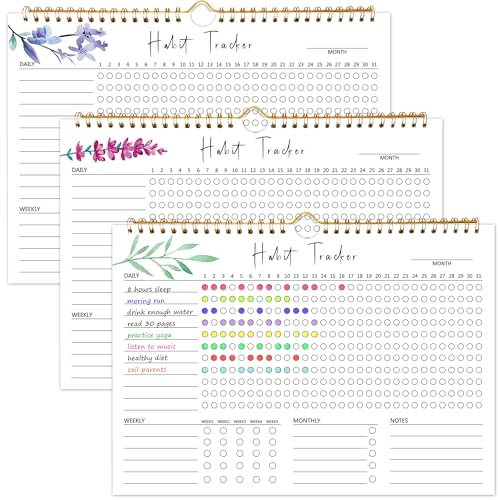




Recommended reads:
- Healthy Habits for the New Year That Feel Easy to Keep
- How to Use Habit Stacking Without Overwhelming Yourself
- How to Stay Consistent Without Losing Your Mind
- A Mindful Morning Routine for a Calmer Start to the Day
- A 5 Minute Mindset Routine to Rewire Your Thoughts
- building habits that hold across the year
- self discipline tips to stop procrastinating
The 1% Rule (and Why It Works)
The Compound Math
Clear’s signature math: 1.01 raised to the 365th power = roughly 37.78. So a 1% daily improvement compounds to 37x over a year. The same math works in reverse: 0.99 to the 365th = roughly 0.03.
Tiny daily losses compound just as ruthlessly as tiny daily gains. This is why micro habits are not ‘small and therefore unimportant’, they are small AND therefore compounding.
The Neural Mechanism
‘Neurons that fire together, wire together’ is Donald Hebb’s 1949 principle, and it explains why micro habits stick faster than larger ones. Each repetition of a tiny action strengthens the neural pathway slightly.
Over weeks, the pathway becomes the default. The behavior runs on autopilot because the neurons literally rewired around it. The growth mindset guide covers the broader neuroplasticity frame this rests inside.
Why Micro Beats Macro (Friction Math)
The Willpower Threshold
Every habit has a friction cost, the mental energy required to start it. Big habits (an hour of exercise, 30 minutes of meditation, a full skincare routine) cost more than the daily willpower budget on busy days.
Micro versions of the same habits (one push-up, three breaths, cleanser only) cost less than the willpower budget even on hard days. The micro version gets done; the macro version gets skipped. Done daily beats skipped occasionally.
The Expansion Comes Later
Here is the secret most micro-habit content skips: tiny is the install, not the destination. The push-up that started as one becomes ten naturally once the habit is grooved. The three breaths become a five-minute meditation once the slot is reliable.
The expansion happens organically after the install. Trying to start with the expanded version is what produces the predictable February failure.
12 Micro Habits That Hold Their Compound
Morning Micro Habits
1. Glass of water on waking (rehydrates, jump-starts metabolism). 2. One minute of natural morning light (anchors circadian rhythm). 3. Three slow breaths before opening your phone (lowers cortisol). 4. One push-up or one stretch (movement primer).
Midday Micro Habits
5. One specific gratitude line written at lunch (cumulative mood lift per UC Davis research). 6. Two minutes outside on a midday break (light + movement reset). 7. One full glass of water with each meal (hits the 8-glass total without thinking).
Evening Micro Habits
8. Lay out tomorrow’s clothes after brushing teeth (removes one morning decision). 9. One page of a book before bed (1 page becomes 1 chapter naturally once installed). 10. Phone charged in another room (the highest-use single sleep habit).
11. One sentence written about the day (low-friction journaling install). 12. Three slow exhales while getting into bed (parasympathetic nervous system activation). The cozy night routine guide covers the evening micro habits in the wider wind-down architecture.
The 4-to-8 Week Effect Window
When You Start to Feel the Compound
The honest answer: weeks one and two feel like nothing. The whole point of micro habits is that you cannot feel them in real time, only in retrospect. The hydration habit does not register as ‘I feel hydrated’ on day five.
By week four, you notice your skin looks better and you have stopped getting that 3 PM headache. The cumulative effect is what shows; the individual day is too small to measure.
What to Expect in Each Phase
Weeks 1-2: the install feels effortful even though the habit is tiny. The friction is mostly mental (‘do I really need to track this’). Weeks 3-4: the habit starts to feel automatic on most days.
Weeks 5-8: the cumulative effect becomes noticeable. Months 3-12: the compound becomes large enough to be visible to other people. The resilience rituals guide covers the broader four-pillar framework micro habits sit inside.
The Plateau Most People Quit At
The Plateau of Latent Potential
Clear’s most useful single concept after the 1% rule. There is a predictable plateau between months 2 and 4 where the practice feels like it has stopped producing results. The plateau is not the work failing, it is the gap between input and visible outcome that all compounding produces.
Most people who quit micro habits quit during this plateau, right before the compound becomes visible.
How to Push Through
Track the inputs, not just the outcomes. Did you drink the water glass today (yes/no)? Did you do the one push-up (yes/no)? The inputs are what you can control; the outcomes follow. Most plateaus end somewhere between month three and month five if the inputs keep happening.
The weekly self care schedule guide covers the broader weekly tracking that protects against the plateau drop-off.
Diminishing Returns (the Honest Limit)
More Is Not Always Better
Micro habits scale up, but only to a point. One glass of water is great; drinking 6 liters a day is dangerous. One push-up grows to 30; doubling every week forever leads to injury.
Even gratitude practices have a diminishing-returns curve where writing 50 things a day produces less lift than writing one specific sensory one. The wisdom is knowing when to expand and when to hold steady.
The Saturation Point
For each habit, there is a saturation point where adding more produces marginal gain or actual harm. Sleep maxes out around 9 hours. Movement maxes out around 60-90 minutes/day for most people.
Calorie restriction maxes out before the diet industry would have you believe. Knowing where the saturation point is on your specific habits is the difference between compounding and burning out.
How to Pick Your Starting Micro Habits
Start With 2 or 3, Not 12
The list above is a menu, not a checklist. Pick 2 or 3 to install in the first 30-60 days. The water-glass + the slow breaths + one page of reading is a perfectly reasonable starting stack.
Once those three are automatic, add the next two. Trying to install 12 at once is the all-or-nothing trap that produces predictable February abandonment.
The Anchor Question
For each micro habit you pick, ask: what is the existing routine I am going to anchor this onto? Water glass anchors to waking up. Breaths anchor to opening the phone. Reading anchors to brushing teeth at night.
Without an anchor, the micro habit floats and gets forgotten. The break bad habits guide covers the inverse work, using the habit loop to dismantle the patterns you want to remove.
Want the simpler weekly diary for the daily habit tracking?
The Self-Care Planner is the lighter weekly companion built for tracking micro habits as they install. It is here.
Frequently Asked Questions
What are micro habits?
Micro habits are tiny daily actions (under 2 minutes each) that compound across the year into measurable change. Examples: one glass of water on waking, three slow breaths before opening the phone, one push-up, one page of a book before bed. The small size reduces friction below the willpower threshold so they get done daily.
Do micro habits actually work?
Yes. James Clear’s 1% rule: improving 1% daily compounds to roughly 37x over a year. The neural mechanism is ‘neurons that fire together, wire together’, repeated tiny actions strengthen pathways until the behavior runs automatically. Most people notice the compound effect in 4-8 weeks of consistent practice.
How long until I see results from micro habits?
Weeks 1-2: install feels effortful even though the habit is tiny. Weeks 3-4: starts to feel automatic. Weeks 5-8: cumulative effect becomes noticeable. Months 3-12: compound becomes large enough to be visible to other people. Most people who quit do so during the months 2-4 plateau, right before the compound becomes visible.
How many micro habits should I start with?
2 or 3 in the first 30-60 days, not all 12 at once. The water-glass + slow breaths + one page of reading is a reasonable starting stack. Once those are automatic, add the next two. Trying to install 12 simultaneously is the all-or-nothing trap that produces predictable February abandonment.
What is the Plateau of Latent Potential?
James Clear’s concept for the predictable gap between months 2-4 where the practice feels like it has stopped producing results. The plateau is not the work failing, it is the gap between input and visible outcome that all compounding produces. Most plateaus end between month 3 and 5 if the inputs keep happening.
Can micro habits hurt you?
Yes, if scaled badly. Micro habits scale up but only to a point. One glass of water is great; drinking 6 liters/day is dangerous. One push-up grows to 30, but doubling every week forever leads to injury. Knowing where the saturation point is on each habit is the difference between compounding and burning out.
Key Takeaways
- James Clear’s 1% rule: 1.01^365 ≈ 37.78. A 1% daily improvement compounds to ~37x over a year. Tiny daily losses (0.99^365 ≈ 0.03) compound just as ruthlessly.
- Neural mechanism: ‘neurons that fire together, wire together’ (Donald Hebb, 1949) , each repetition strengthens the pathway until the behavior runs on autopilot.
- Effect window: weeks 1-2 feel like nothing; weeks 3-4 the habit feels automatic; weeks 5-8 the cumulative effect becomes noticeable; months 3-12 the compound is visible to others.
- Plateau of Latent Potential (Clear): months 2-4 feel like nothing is happening; this is when most people quit, right before the compound becomes visible.
- Diminishing returns are real: water/sleep/movement/calorie restriction all have saturation points. Tiny is the install, expanded is the steady state , but expansion has limits.
Final Thoughts on Micro Habits
Micro habits that create real change are tiny enough to do on hard days, anchored to routines you already have, and tracked as inputs rather than outcomes. The 1% rule is real, the neural mechanism is real, the 4-to-8 week effect window is real, and so is the plateau most people quit at.
The right move is to install 2 or 3 at a time, expand naturally once they are grooved, and trust the compound across months 3-12 even when the day-to-day feels like nothing is happening.
Last update on 2026-08-15 / Affiliate links / Images from Amazon Product Advertising API