
The new year productivity tips that actually work in 2026 come straight from Cal Newport’s slow productivity frame: do fewer things, work at a natural pace, obsess over quality. The two specific routines he recommends are time blocking for deep work (90-minute blocks) and a 15-minute shutdown ritual at the end of the day.
Both are designed for the 66% of US professionals reporting burnout.
The dominant January productivity advice keeps recommending more. More apps, more hacks, more 5 AM wake-ups, more squeezed-in tasks per hour. The data on burnout suggests the opposite is what actually moves the needle: in 2025, over 66% of US professionals reported burnout, and Gen Z is now the most burned-out generation on record.
Cal Newport’s 2024 book Slow Productivity argues the productivity gains of the next decade will not come from doing more, they will come from doing fewer things at higher quality. CNBC ran a piece in late December 2025 covering his two specific 2026 routines: time blocking for deep work, and a 15-minute shutdown ritual at the end of each workday.
This guide covers both, plus the smaller tactical moves that round out the design.
Want the year-long planner that supports the slow-productivity routine?
The Self-Care & Wellness Planner is the year-long companion built around the kind of structured weekly design slow productivity requires. It lives here.
Recommended Tools for the Productivity Work
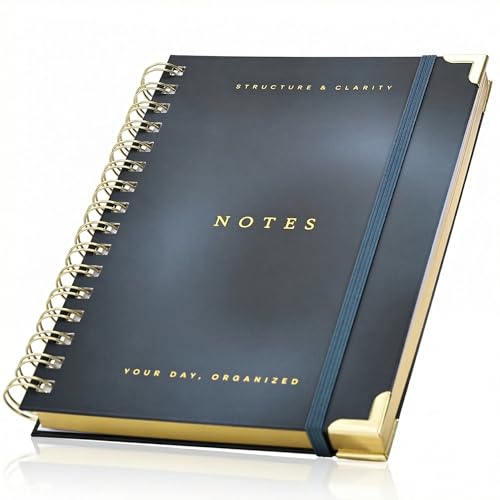
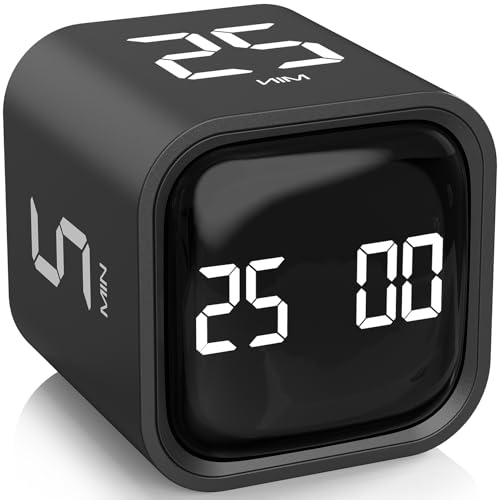
A short stack of physical anchors keeps the productivity work on track. The five below are the ones most often cited in focus and deep-work research.



Recommended reads:
- Healthy Habits for the New Year That Feel Easy to Keep
- A Morning Routine for the New Year That Holds Past February
- A New Year Goal Setting Routine That Turns Plans Into Action
- Mindset Shifts for the New Year That Actually Stick
- Smart Goal Setting Ideas for a New Year That Actually Works
The Slow Productivity Frame
Cal Newport’s 3 Principles
Cal Newport, a computer science professor at Georgetown and author of Slow Productivity (2024), distills the whole frame into three principles. Do fewer things. Work at a natural pace. Obsess over quality. None of these is the kind of advice that goes viral on TikTok, which is part of why they actually work.
The frame is designed against the hustle template that produced the burnout numbers in the first place.
Why It Lands Different in 2026
MasterClass launched a Newport course on focus and reclaiming time in late 2025. The CNBC December 2025 piece described his frame as the one that best addresses the >66% burnout reality. Slow productivity is not new, but 2026 is the year it stops being a fringe philosophy and becomes the default frame in mainstream productivity writing.
The balance hustle and healing guide covers the broader rest-and-work design this fits inside.
Tip 1: Time Blocking for Deep Work
Why Time Blocking Specifically
Newport’s logic: your brain is not wired for sustained concentration on abstract or symbolic topics, and the modern knowledge-work calendar (reactive meetings, constant Slack, inbox notifications) actively works against the conditions deep work needs.
Time blocking reserves specific blocks on the calendar where the demanding work is the only thing that happens. Without those reserved blocks, the deep work loses every time to the reactive work.
The 90-Minute Block Specifically
Roughly 90 minutes is the upper limit most people can sustain in one continuous deep-work block. Three of those blocks per day, with full breaks in between, is the working frame for high-quality output. The blocks go on the calendar like client meetings, non-negotiable, defended, with the same status as anything else on the schedule.
Tip 2: The Shutdown Ritual at End of Day
The 15-Minute Closure
Newport’s second recommended 2026 routine. At the end of every workday, spend 15 minutes processing what is still open. Capture anything still on your mind into your task system. Review tomorrow’s calendar. Name 3 explicit priorities for tomorrow. Send any waiting-for follow-ups. Close all work applications. Say (out loud or in writing) ‘Shutdown complete.’
Why the Verbal Cue Matters
The shutdown phrase is functional, not symbolic. It creates a psychological boundary the brain registers as a transition. Without that explicit closure, the Zeigarnik Effect (the brain’s tendency to keep cycling unfinished tasks) keeps work thoughts running through your evening. The workday shutdown ritual covers the full 5-element sequence and how to install it.
Tip 3: Protect the First Hour From Reactive Work
Why Mornings Matter Most
The first hour of the workday is the one block of time you have the most control over. Once email and Slack open, your day is partially someone else’s. Protecting that hour for a single high-priority deep-work task is one of the simplest design moves with the largest output effect.
How to Defend It
Email and Slack closed until 10 AM (or whatever your equivalent first-hour endpoint is). Phone in another room. One specific task selected the night before during the shutdown ritual. The defense has to be structural, not willpower-based, willpower fails on busy mornings; the closed app does not.
The mindful morning routine covers the wider morning architecture this protected first hour fits inside.
Tip 4: Build in Real Breaks (the Microbreak Evidence)
Why Brains Need the Breaks
A 2022 PLOS ONE meta-analysis by Albulescu et al. (22 studies, 2,300+ participants) found that micro-breaks of 10 minutes or less reduce fatigue and increase vigor, particularly for tasks of lower cognitive demand. The mechanism is brief task-switching strengthening cognitive flexibility, which then boosts performance after the break.
How Long, How Often
Five-minute break every 60-90 minutes during a deep-work day. Stand up. Walk to the kettle. Look out the window. Do anything that contrasts with the cognitive work you were just doing. Knowledge workers benefit most from physical-movement breaks; physical workers benefit most from mental-rest breaks.
The contrast principle is the load-bearing variable. The creative reset guide covers the microbreak protocol in full detail.
Tip 5: One High-Priority Task Per Day (The MIT)
The Most Important Task Rule
Pick ONE most-important task each morning. Just one. Make it the first deep-work block. Everything else on the to-do list is secondary, and if the day collapses into reactive mode, the one most-important task at least got done. Over a year, this single design move outperforms most other productivity hacks combined.
Why Limiting to One Works
More than one priority is no priority. The brain cannot hold five ‘most important’ tasks in working memory and treat them all as most important. Picking ONE explicit priority gives you something to defend and something to measure the day against. The other tasks happen if they happen, and the day still counts as a win.
Tip 6: The Weekly Review (Friday Afternoon)
The 30-Minute Slot
Friday afternoon. 30 minutes. Three questions: what did I actually finish this week, what is carrying over to next week, what is the one most-important task for Monday morning. The review is the cadence that keeps the time-blocking system honest and prevents the rolling drift that kills most productivity setups by March.
Why Friday Specifically
Friday afternoon catches the week before it ends. Sunday-evening planning feels stressful because Monday is already pressing. Friday-afternoon planning feels generative because the week is wrapping. Same task, different emotional register, much higher completion rate. The cozy night routine covers the broader evening practice the weekly review can fold into.
The Critique Worth Naming
Slow Productivity Has Limits
Cal Newport himself acknowledges the frame works better in roles with autonomy than in high-pressure industries where responsiveness is measured in minutes. Some workers risk being cut during layoffs because of lower output volume when managers do not recognize quality. Newport’s answer: adapt rather than adopt wholesale; slow critical parts of the workflow without halting responsiveness where genuinely required.
How to Adapt If Slow Is Not Fully Available
Pick the principles you can actually implement. Maybe time blocking is not possible because your calendar is meeting-heavy, but the shutdown ritual is. Maybe the protected first hour is not possible because your role is responsive, but the one-MIT-per-day rule is. Take what fits. The 2026 version of slow productivity is more about direction than orthodoxy.
Want the simpler weekly diary for tracking the productivity work?
The Self-Care Planner is the lighter weekly companion for the daily productivity tracking. It is here.
Frequently Asked Questions
What are the best new year productivity tips for 2026?
Cal Newport’s slow-productivity frame: do fewer things, work at a natural pace, obsess over quality. His 2 specific routines for 2026: time blocking (90-minute deep-work blocks) and a 15-minute end-of-day shutdown ritual. Plus protecting the first hour from email, taking real microbreaks, and a Friday weekly review.
What is slow productivity?
A 2024 framework by Cal Newport (Georgetown computer science professor) built on 3 principles: do fewer things, work at a natural pace, obsess over quality. It is designed against the hustle template that produced the >66% US burnout rate in 2025. 2026 is the year it crossed from fringe to mainstream productivity.
How long should a deep-work block be?
Roughly 90 minutes is the upper limit most people can sustain in one continuous deep-work block. Three of those blocks per day, with full breaks in between, is the working frame for high-quality output.
What is a shutdown ritual?
Cal Newport’s 15-minute end-of-day routine: capture anything still on your mind, review tomorrow’s calendar, name 3 explicit priorities for tomorrow, send waiting-for follow-ups, close all apps, say ‘Shutdown complete.’ Creates a psychological boundary that interrupts the Zeigarnik Effect (the brain’s tendency to keep cycling unfinished tasks).
Do microbreaks really help productivity?
Yes. The 2022 PLOS ONE meta-analysis by Albulescu et al. (22 studies, 2,300+ participants) found that micro-breaks of 10 minutes or less reduce fatigue and increase vigor, particularly for tasks of lower cognitive demand. Five-minute breaks every 60-90 minutes is the practical version.
Does slow productivity work in high-pressure jobs?
Newport himself acknowledges it works better in roles with autonomy than in high-responsiveness industries. The adaptation: pick the principles you can actually implement. Maybe time blocking is hard but the shutdown ritual works. Maybe the first hour is hard but the one-MIT-per-day rule works. Take what fits the role.
Key Takeaways
- Cal Newport’s slow productivity (2024 book): do fewer things, work at a natural pace, obsess over quality. CNBC December 2025: his 2 recommended 2026 routines are time blocking + shutdown ritual.
- Context: >66% of US professionals reported burnout in 2025; the frame is designed against the hustle template that produced that number.
- 90-minute deep-work blocks are the upper limit most brains sustain in one sitting; 3 per day with breaks is the working frame.
- PLOS ONE 2022 meta-analysis (Albulescu et al., 22 studies, 2,300+ participants): micro-breaks ≤10 min reduce fatigue and increase vigor.
- Pick ONE most-important task per day; protect the first hour from email; do a 30-minute Friday weekly review.
Final Thoughts on New Year Productivity Tips
New year productivity tips that actually move the needle in 2026 are fewer, not more. Slow productivity’s three principles. Time blocking for deep work. A shutdown ritual at end of day. One protected first hour. Real microbreaks. One most-important task.
A Friday review. None of it is dramatic. All of it compounds across a year that produces more high-quality output than the hustle version does, with less of the burnout that has become the default backdrop of 2026.
Last update on 2026-08-15 / Affiliate links / Images from Amazon Product Advertising API