

Smart money habits that build wealth are the boring proven ones: pay yourself first 20%, live below your means, invest consistently across decades, avoid bad debt, read regularly, sleep seven hours, exercise daily. The dramatic moves rarely matter.
The Toyota Corolla parked in the millionaire’s driveway. The secondhand sofa in the living room. The same modest house the family has lived in for 22 years. The consistent Roth IRA contribution that has been running quietly every month since the early 30s.
The boring specifics of the Millionaire Next Door composite that Thomas Stanley and William Danko documented across decades of survey work.
The money habits that build wealth are almost never the ones the hustle-culture corner of the internet sells. They are the slow boring proven behaviors millionaire research has consistently surfaced. Pay yourself first. Live below your means.
Invest consistently across decades. Avoid high-interest debt. Read regularly. Sleep seven hours. Exercise daily. Thomas Corley’s Rich Habits research found 67% of self-made millionaires read for self-improvement at least 30 minutes daily, 76% exercise 30 minutes daily, 93% sleep seven or more hours, and 80% set specific long-term goals.
The actual wealth and the appearance of wealth are often the opposite of each other.
Recommended Money Habit Books at a Glance
Five canonical money habit books behind the proven behaviors. The numbered habits further down are the actual practice.






Recommended blogs to read:
- Finance Basics for Adults Who Skipped the Money Talks
- How to Invest Like the Millionaire Next Door
- Financial Habits to Build at Every Age
- Financial Moves That Actually Secure Your Future
- Stock Market for Beginners Without the Jargon
Why the Boring Habits Outperform the Dramatic Ones
The investing math gets quietly enforced by compound interest across decades, which is why the same uninteresting habits keep producing the wealth that the dramatic crypto-influencer moves keep failing to produce. A 25-year-old investing 500 dollars a month at a 7% average return reaches roughly 1.2 million by age 65.
A 35-year-old needs to invest 1100 dollars a month at the same return to land in the same place. The dramatic 10x trade does not exist for the long-term compounding machinery; the consistent monthly contribution does.
JL Collins’ Simple Path to Wealth lays the mechanism out in the bluntest possible form: high savings rate plus low-fee index investing plus decades of consistency equals financial independence. The same rule shows up in Morgan Housel’s Psychology of Money from a different angle: the people who build real wealth are the ones with the temperament to keep the system running through the panics, the dips, and the dramatic headlines that make abandoning the plan feel rational.
The 10 Smart Money Habits That Actually Build Wealth
Ordered by long-term wealth impact. Pick one to implement this month. The habits compound across years.
1. Pay Yourself First (20%)


Before any bill gets paid, 20% of every paycheck moves into savings and investment accounts automatically. David Bach calls this the Automatic Millionaire system. The transfer happens the day the paycheck lands, before any spending decision has the chance to claim the money.
The habit eliminates the willpower battle entirely because the money was never in the checking account long enough to be tempting.
2. Live Below Your Means


Stanley and Danko’s Millionaire Next Door research found the median millionaire drove a five-year-old Toyota, lived in a modest middle-class neighborhood, and spent less than 7% of household income on cars. Living below means is the single fastest path to a high savings rate, and a high savings rate is the single biggest predictor of long-term wealth.
The lifestyle inflation that follows the raise is what keeps the savings rate stuck.
3. Invest Consistently in Low-Fee Index Funds

VTSAX or a total market index fund equivalent. The same dollar amount every month, automatically. JL Collins’ Simple Path to Wealth makes the case that low-fee index investing across decades outperforms the vast majority of stock-picking strategies and active management approaches once fees are factored in. The boringness is the feature.
4. Avoid Bad Debt


![The Total Money Makeover Set : The Total Money Makeover [hardcover] & The Total Money Makeover...](https://m.media-amazon.com/images/I/41oAYsglTtL._SL160_.jpg)
Credit card balances at 24% APR cancel any reasonable investment return. Dave Ramsey’s Total Money Makeover frames the math bluntly: high-interest debt is the leak that prevents the wealth-building machine from ever filling up. Pay it off aggressively. Use credit cards as a payment method, not a borrowing tool. The balance gets cleared every month or the system breaks.
5. Build the Emergency Fund First
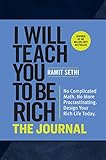

Three to six months of expenses in a high-yield savings account before the aggressive investing begins. Ramit Sethi’s I Will Teach You to Be Rich frames the emergency fund as the foundation that prevents the next car repair or medical bill from turning into credit card debt and undoing two years of progress.
The fund is unsexy. The fund is what keeps the rest of the system standing.
6. Read Regularly


Thomas Corley’s Rich Habits research found 67% of self-made millionaires read for self-improvement at least 30 minutes daily. The reading habit compounds the way the investment habit compounds: small daily inputs accumulating into a different person across decades. Books on money, business, biography, and psychology produce the mental models that surface in the actual decisions years later.
7. Sleep Seven Hours


93% of the wealthy in Corley’s research sleep seven or more hours a night. Sleep is not productivity theater. Sleep is the recovery window that produces the energy for the work, the attention for the reading, the executive function for the spending decisions, and the emotional regulation for the long-term planning.
The five-hour-sleep grind-culture identity is the fastest route to burning out the engine that makes wealth possible in the first place.
8. Exercise Daily
76% of self-made millionaires exercise 30 minutes daily. The same compounding logic applies. A 30-minute walk every morning across 30 years is a different body and a different brain than the version that skipped the walk. The exercise habit produces the energy, focus, and longevity that the long-term wealth-building system requires to keep running for the decades it needs.
9. Build Multiple Income Streams


Corley’s research found 65% of self-made millionaires had three or more income streams before reaching their first million. Side income, rental income, dividend income, royalty income. The diversification protects against the single-employer risk and accelerates the savings rate beyond what a single salary alone usually allows. Start with one additional stream; let it compound.
10. Set Clear Long-Term Goals
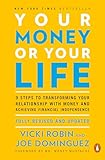


80% of self-made millionaires set specific long-term goals. Vicki Robin’s Your Money or Your Life frames the money habit as deeply linked to the question of what you actually want a life to look like across decades.
The clearer the long-term picture, the easier the daily savings decision, because the money is not being withheld from you; the money is funding the version of you the goals already described.
How Long the Habits Take Before They Compound
The first measurable result usually arrives between months three and six. The savings rate is now visible as a growing account balance. The investment account has its first quarterly compounding moment. The credit card balance has noticeably shrunk.
The reading habit has produced one or two finished books and a different internal vocabulary around money. Months one through three are the discomfort window where the new habits feel fragile and the spending temptations feel loudest.
The deeper compounding gains arrive between years three and ten. The investment account has compounded through at least one full market cycle. The emergency fund has absorbed at least one real emergency without breaking the system. The income streams have begun to produce real meaningful side revenue.
The reading habit has produced the mental models that surface in the actual decisions. The boring proven habits have done what they always do across enough time: outperformed the dramatic transformation strategies the influencer-economy corner of the internet keeps selling.


Frequently Asked Questions
What money habits do millionaires have?
Pay yourself first 20% of gross income, live below your means, invest consistently in low-fee index funds, avoid high-interest debt, build a 3-6 month emergency fund, read regularly for self-improvement, sleep seven or more hours nightly, exercise 30 minutes daily, build multiple income streams, set clear long-term goals.
How do I build wealth from zero?
Start with the savings rate. Automate a 20% transfer to a high-yield savings account the day each paycheck lands. Build the 3-6 month emergency fund first. Pay off high-interest debt aggressively. Open a Roth IRA and a brokerage account, set up automatic monthly contributions into a low-fee total market index fund. Hold the position through market dips.
Do millionaires drive expensive cars?
Stanley and Danko’s Millionaire Next Door research found the median millionaire drove a five-year-old Toyota, Honda, or Ford. Corley’s Rich Habits research found roughly 55% of self-made millionaires drove a Toyota or Honda. The expensive luxury car is more often a signal of the high-income spender than the high-net-worth saver.
How many books do millionaires read?
Thomas Corley’s Rich Habits research found 67% of self-made millionaires read for self-improvement at least 30 minutes daily, and 88% read for at least 30 minutes a day for education or career purposes. The reading habit compounds across decades into a different decision-making engine.
What is the 50/30/20 budget rule?
50% of after-tax income to needs (housing, food, utilities), 30% to wants (dining, entertainment, travel), 20% to savings and debt payoff. The rule is a starting framework. The wealth-building versions usually shift the savings line to 25-30% and trim the wants line accordingly.
How much should I save each month to build wealth?
Aim for 20% of gross income at minimum. The financial-independence community usually targets 30-50% savings rates. A 25-year-old saving and investing 500 dollars a month at a 7% average return reaches roughly 1.2 million by age 65. The savings rate is the single biggest variable in the long-term wealth equation.
Key Takeaways
- Smart money habits are the boring proven ones: pay yourself first 20%, live below your means, invest consistently, avoid bad debt.
- Thomas Corley’s Rich Habits research found 67% of self-made millionaires read 30 minutes daily and 93% sleep seven hours.
- The Toyota and the modest house are statistically the millionaire pattern. The luxury car is statistically the high-income spender pattern.
- Low-fee total market index investing across decades outperforms the vast majority of stock-picking strategies.
- First measurable results between months three and six. Real compounding wealth between years three and ten.
- Multiple income streams (65% of self-made millionaires have three or more) accelerate the savings rate beyond what one salary alone allows.
Final Thoughts
The money habits that actually build wealth are the ones that look unimpressive on social media. Pay yourself first. Live below your means. Invest in low-fee index funds every single month. Read regularly.
Sleep seven hours. Exercise daily. The Toyota Corolla in the millionaire’s driveway and the modest house in the middle-class neighborhood are the actual wealth pattern Stanley and Danko documented across decades.
The boring habits keep winning because compound interest rewards consistency, not drama. Pick one habit this month. Hold it. Add the second once the first feels automatic. Across decades, the math takes care of the rest.
Last update on 2026-10-08 / Affiliate links / Images from Amazon Product Advertising API