

Quick answer: Old money outfits come down to a few calm pairings: a camel trench with cream jeans, a navy blazer with white denim, a cable knit with wool trousers, and a long wool coat over straight jeans. Keep to neutrals, choose cashmere, wool, silk, linen or leather, and skip logos.
You don’t need a trust fund for old money outfits. You need a camel coat that fits through the shoulders, a sweater that doesn’t pill after the third wash, and the discipline to stop buying things in neon. Most of the look is restraint, and restraint is free. The 18 outfits here are sorted by season, with the colors, fabrics and cheaper swaps that make them read expensive.
Five pieces that carry most old money outfits
Start with a cashmere crewneck, tailored wool trousers, a camel trench, a white silk blouse and leather loafers. They show up again and again in the outfits below, so if you only buy five things this year, buy these in neutral colors.


You might also like:
- quiet luxury looks with cleaner lines
- preppy casual outfits for weekends
- rich mom outfits for busy days
What makes an outfit look old money?
An outfit looks old money when the fabric, fit and color do the talking and nothing carries a visible logo. Think navy cable knits, pressed trousers, a worn leather belt and pearl studs. The look borrows from heritage dressing, so a few preppy details are welcome.
Quiet luxury is the stricter cousin. It drops the nostalgia, keeps the clean lines and leans into 1990s minimalism: Carolyn Bessette in a slip skirt and a plain black coat. Most real wardrobes sit somewhere between the two, and that’s fine.
The rule worth holding onto is fewer, better pieces. Twenty things that fit you well will get you further than a closet full of trend buys.
Which colors look the most old money?
Ivory, camel, navy, charcoal, stone and olive look the most old money, and getting them right is the cheapest upgrade you can make. A simple split works: about 70% base neutrals, 20% one supporting shade like chocolate brown or grey, and 10% a seasonal accent such as burgundy or forest green in winter, or soft blush in summer.
Color discipline reads as taste at any price. A basic merino crewneck in camel looks like it belongs in this wardrobe. The same knit in a loud print doesn’t. Same sweater, different message.
Which fabrics are worth paying for?
Cashmere, wool, silk and real leather are worth paying more for, because cheap versions look and feel cheap within a few wears. Cotton and linen are where you can save without anyone noticing.
Fabrics worth the spend
Grade A cashmere, merino and lambswool knits, silk or silk-cotton blouses, and leather shoes and bags. Quince and Uniqlo both sell real cashmere and merino, so you don’t have to go designer to get the proper fiber.
Fabrics where price barely shows
A well-fitting cotton button-down from Uniqlo is hard to tell apart from a designer one. Linen trousers in sand or white look expensive almost regardless of the label.
Tencel and modal drape nicely for the price too, which helps with blouses and slip skirts.
Fabrics to skip
Shiny polyester, acrylic knits that pill by the second wear, Lurex, and anything sold as “performance stretch” outside the gym. Natural fibers catch light softly. Synthetics bounce it back, and the eye notices.
The 20-piece capsule behind every outfit
Twenty pieces is enough to dress for work, weekends and dinners without anything sitting unworn. Add a heavier coat or a couple of summer dresses on top as the seasons change.
- Six tops: two white button-downs, one silk blouse, two cashmere or merino crewnecks (one neutral, one accent color) and a striped boat-neck
- Four bottoms: charcoal wool trousers, camel or olive trousers, an A-line midi skirt and dark straight jeans
- Three layers: a camel trench, a single-breasted navy blazer and a wool coat
- Two dresses: a little black dress and a neutral wrap or shift dress
- Three pairs of shoes: leather loafers, ballet flats and low block or kitten heels
- Two accessories: a structured leather bag and a silk scarf (vintage ones on Poshmark are worth hunting)
How do you dress old money on a budget?
You dress old money on a budget by spending on the fibers that show and saving on everything else. Designer cashmere and tailoring can run into four figures, but these swaps get you most of the way:
- Cashmere crewneck: Quince or Uniqlo, both selling Grade A cashmere for around $100 or less
- Wool trousers: Mango or Theory, depending on budget. Fit matters more than the label
- Trench coat: try Uniqlo or J.Crew before you look at Burberry
- Silk blouse: Quince or Everlane
- Leather loafers: Sam Edelman or Sezane. Check that the lining is leather too, not synthetic
Spring old money outfits
Spring is trench season. Keep the base light (cream, white, pale blue) and let one navy or camel piece anchor each look.
1. Camel trench with cream jeans
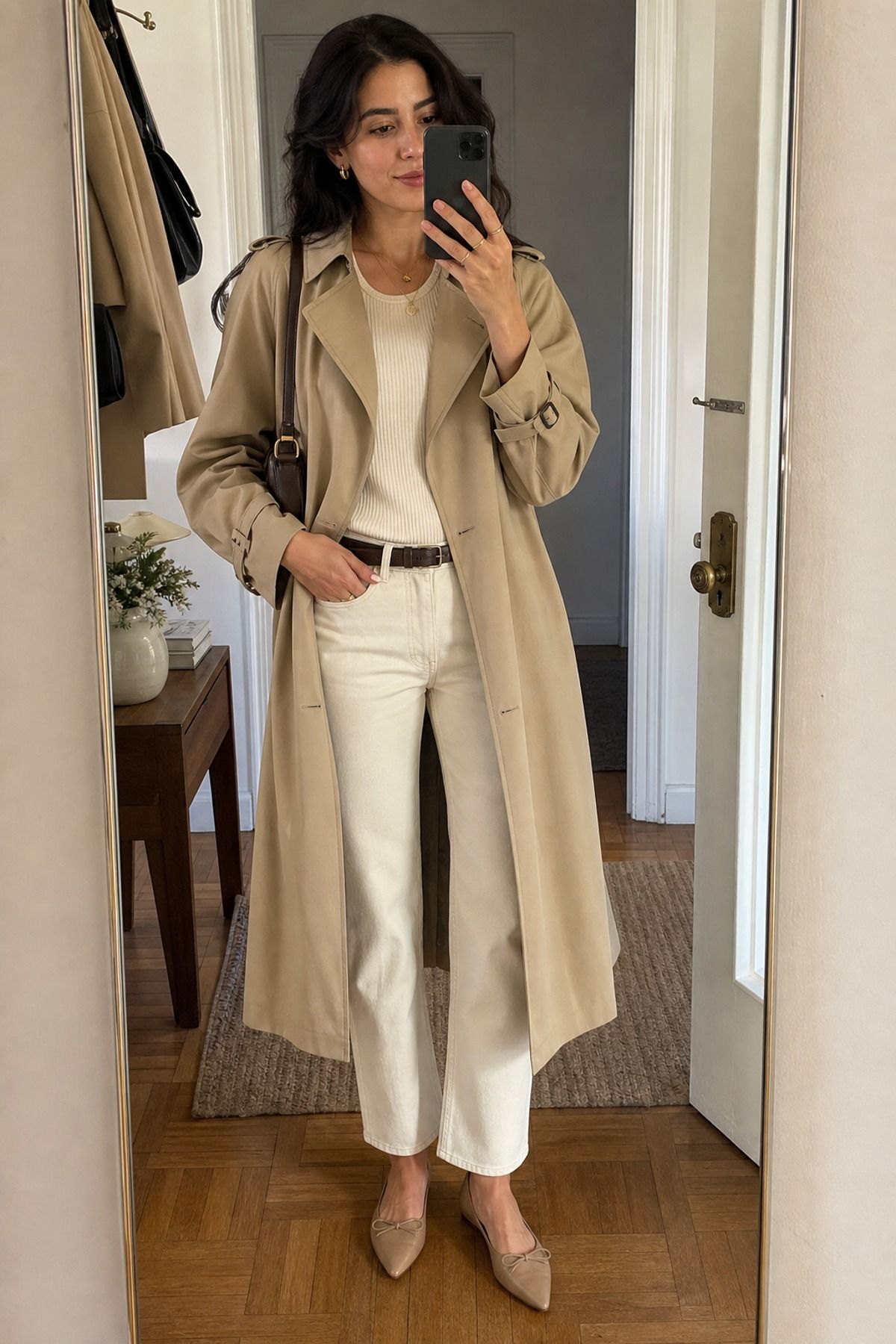


This is the outfit to copy first. A belted camel trench over a white tee and cream straight jeans, finished with brown loafers, looks considered without looking like you tried. If the afternoon warms up, leave the trench open and tie the belt behind you. There are more ways to wear one in these trench coat outfits.
2. Cardigan with a midi skirt
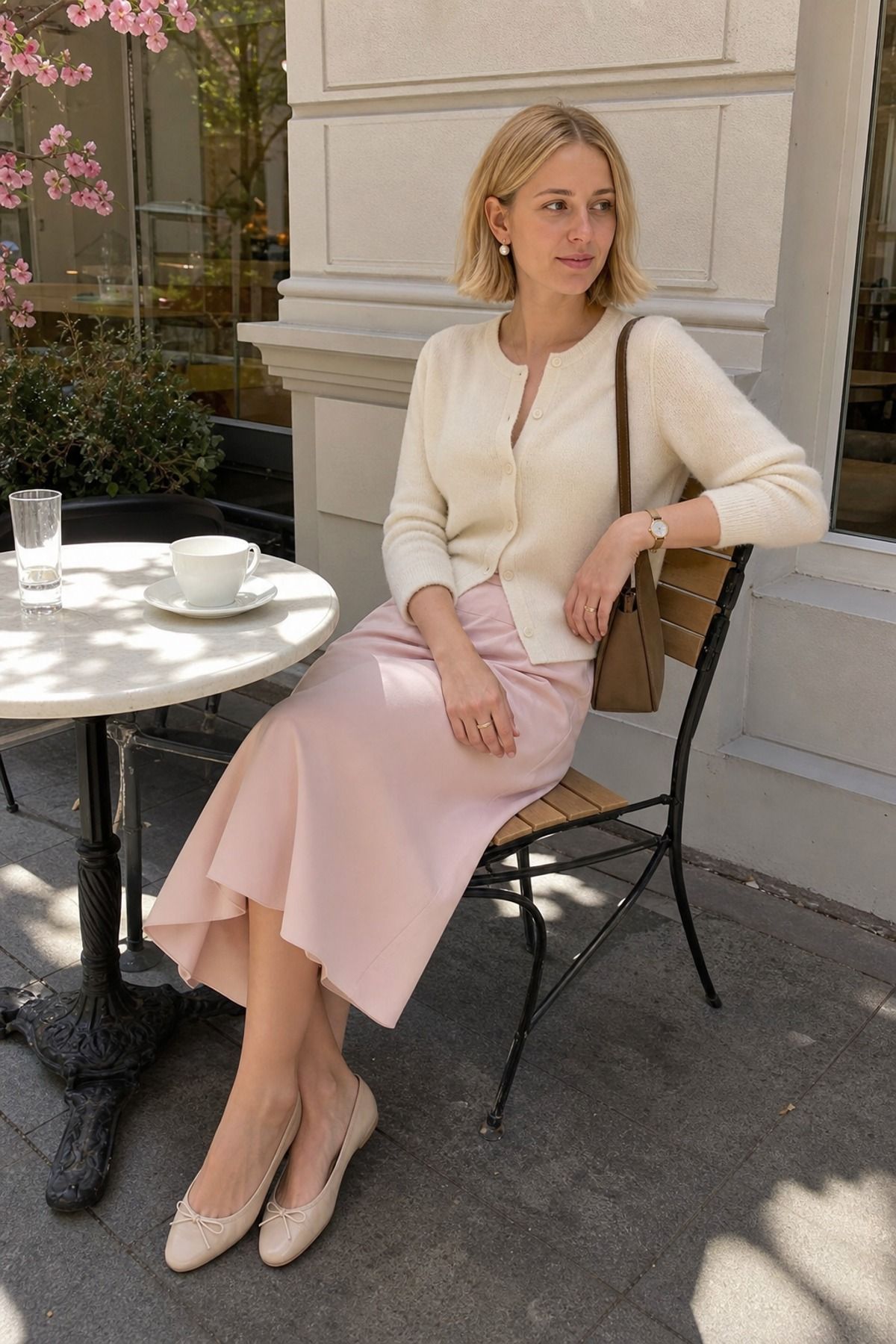


Button a fine-knit cardigan all the way up and wear it as a top over a pleated or A-line midi skirt. Ballet flats keep it light, and a slingback works for the office. Skip chunky knits here. They swallow the skirt.
3. Ballet flats with cropped trousers
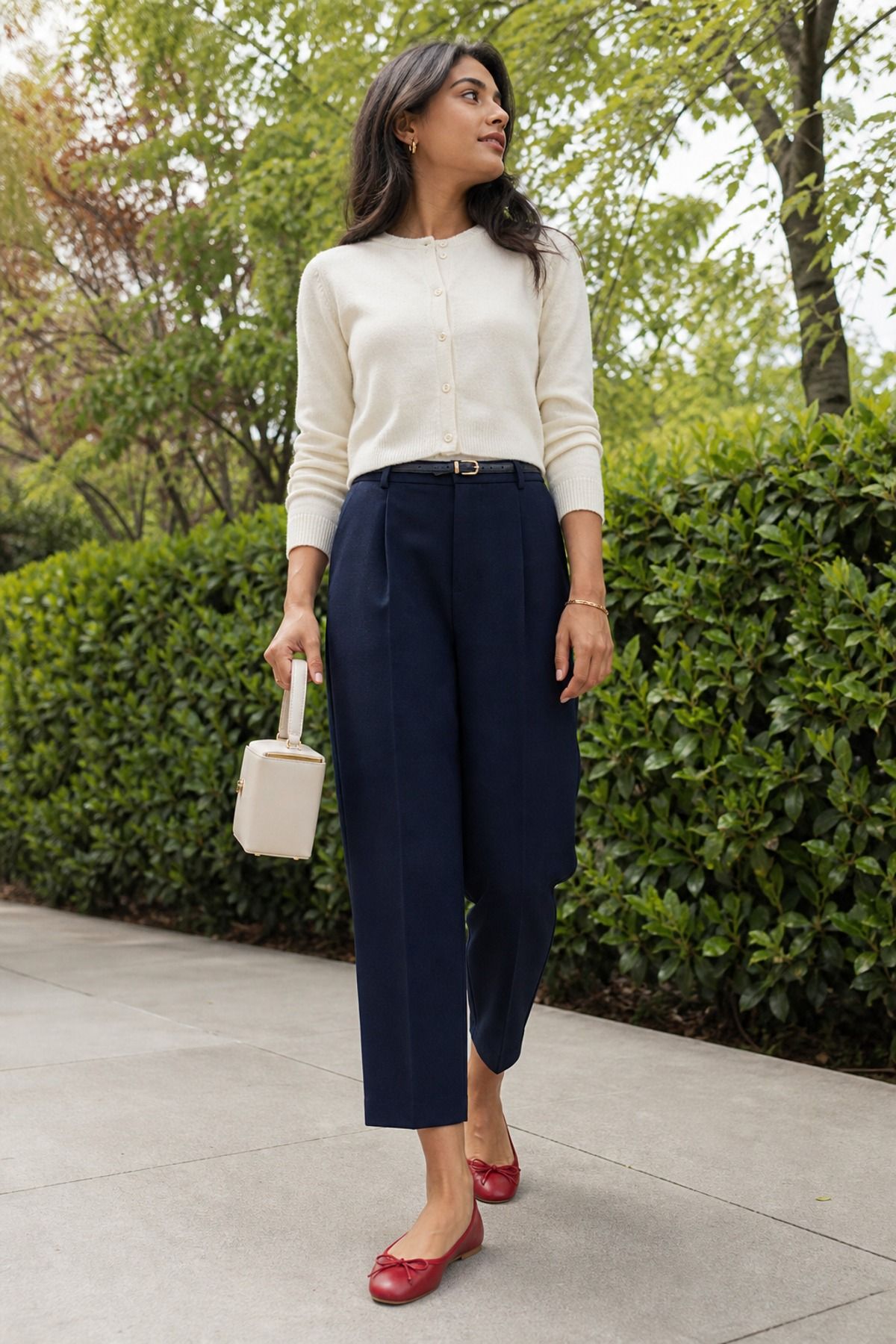


Cropped trousers that stop just above the ankle bone were made for ballet flats. Add a striped boat-neck and a leather shoulder bag and you’re done.
4. Navy blazer with white denim
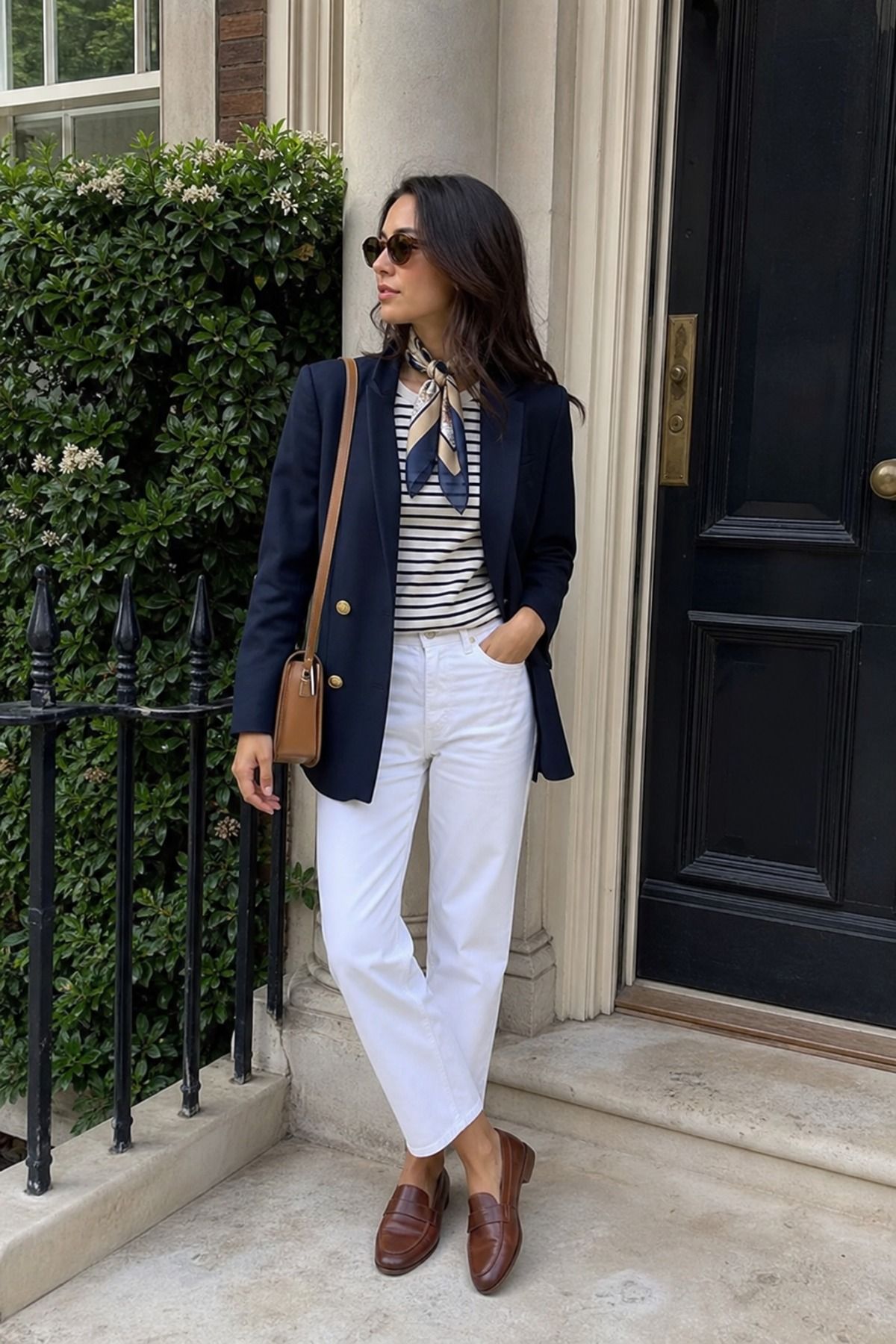


A navy single-breasted blazer over white jeans is the most classic look on this list. Wear a blue oxford shirt underneath and tan loafers. If white jeans feel risky, go ecru: it’s more forgiving and still crisp.
Summer old money outfits
Summer old money style lives in linen, cotton poplin and leather sandals. Stick to white, sand, navy and pale stripes, and keep hems at the knee or below for anything you’d wear to lunch.
5. Linen vest with matching shorts


A tailored linen vest worn as a top with matching shorts is the summer version of a suit. Pick shorts that hit mid-thigh or lower, add flat leather sandals and keep jewelry to small gold hoops. It will wrinkle, and that’s part of the charm.
6. White dress with leather sandals


Go for a cotton or linen midi with some structure and a square or boat neckline, then add tan leather slides. Check the fabric in daylight before you buy, since thin white cotton can turn sheer.
7. Polo with tailored shorts
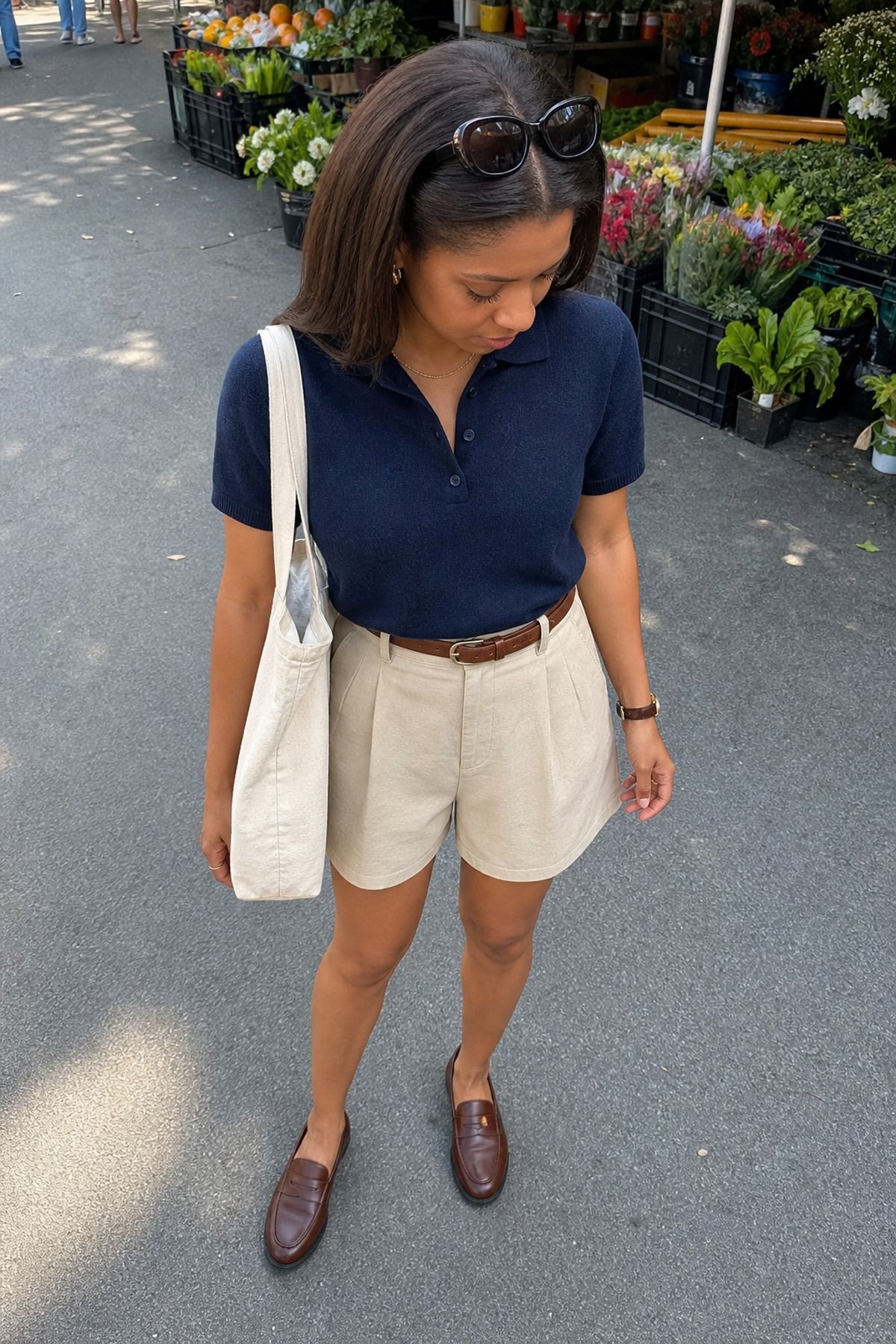

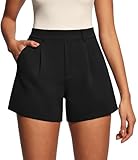

A fitted knit polo tucked into pleated tailored shorts says tennis club without tipping into costume. Navy and cream is the safest pairing. Loafers or clean white sneakers both work.
8. Linen shirt with wide-leg pants
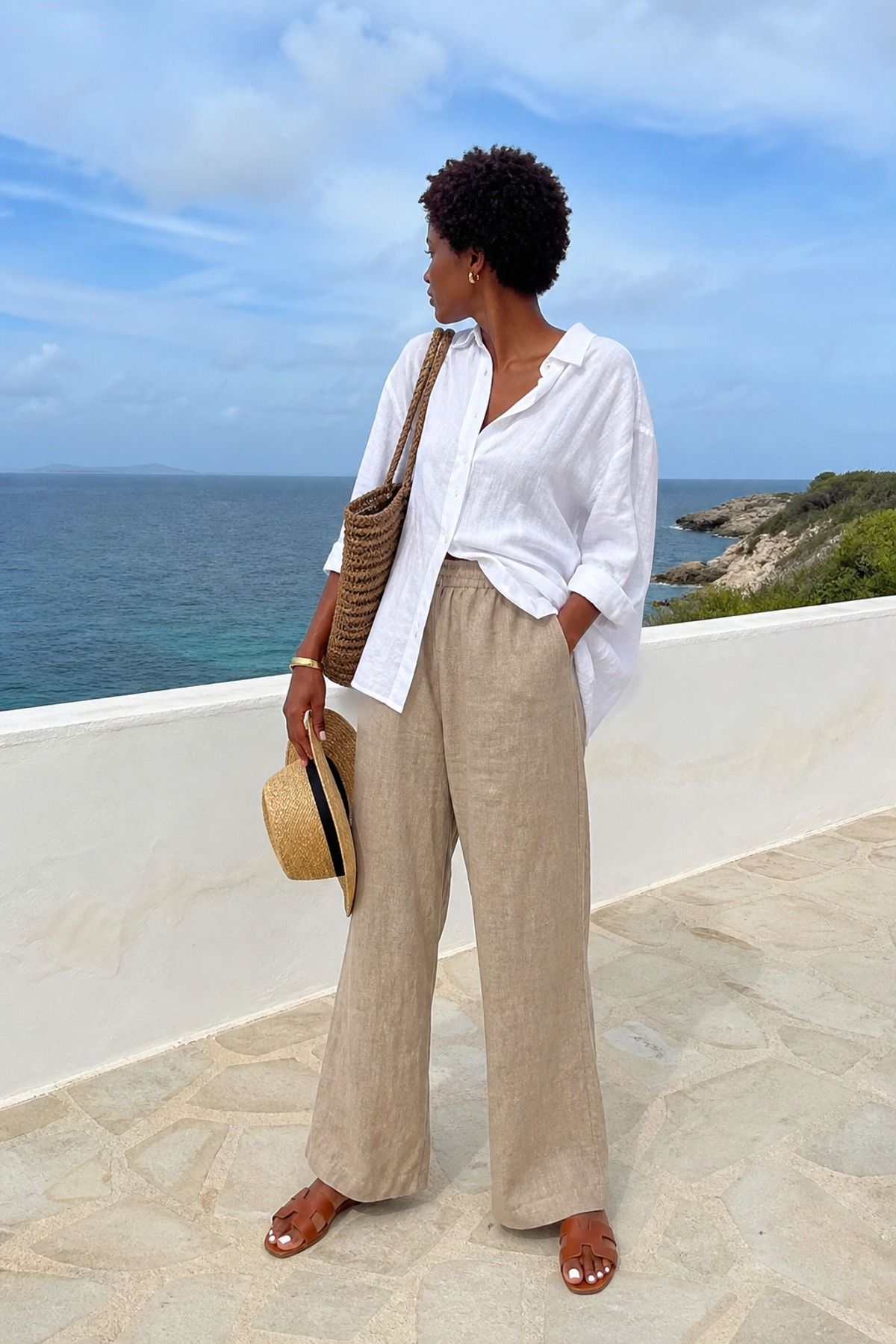


Oversized white linen shirt, sand wide-leg linen pants, flat sandals. This is the one for a 30°C (86°F) city day or a resort dinner. Half-tuck the shirt so the pants don’t swallow you.
9. Silk scarf with a tank dress
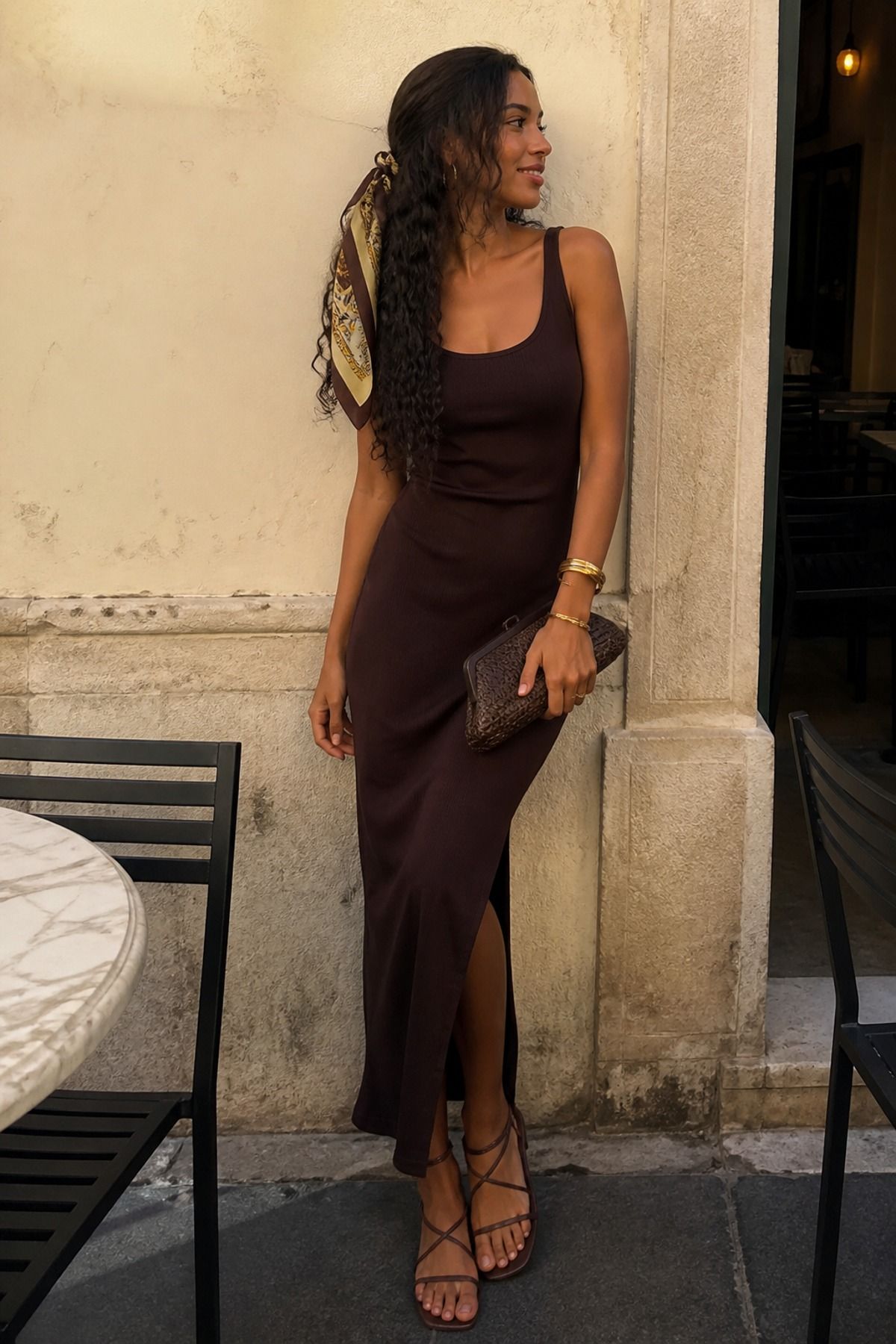


A plain knit tank dress needs one detail, and a silk scarf tied at the neck or knotted on your bag handle is it. Pick a scarf in navy, red or a vintage print and keep the dress solid.
10. Raffia tote with a shirtdress
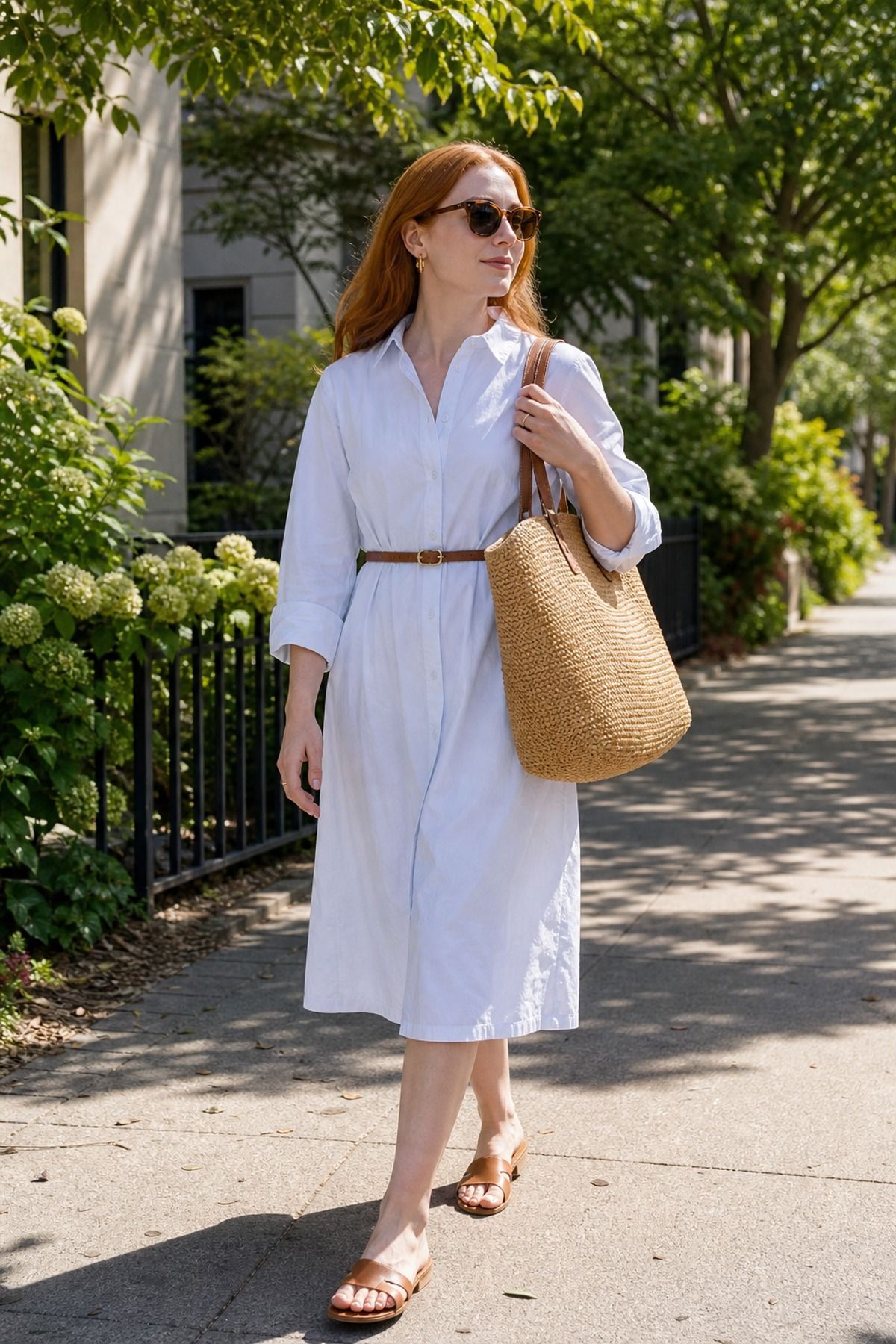


A striped or chambray shirtdress belted at the waist, plus a raffia tote, covers a market morning and a long lunch. Roll the sleeves twice and wear espadrilles or leather sandals.
Fall old money outfits
Fall is the season this look was made for. Bring in camel, chocolate brown, olive and burgundy, and swap sandals for loafers and riding boots.
11. Camel coat with dark denim
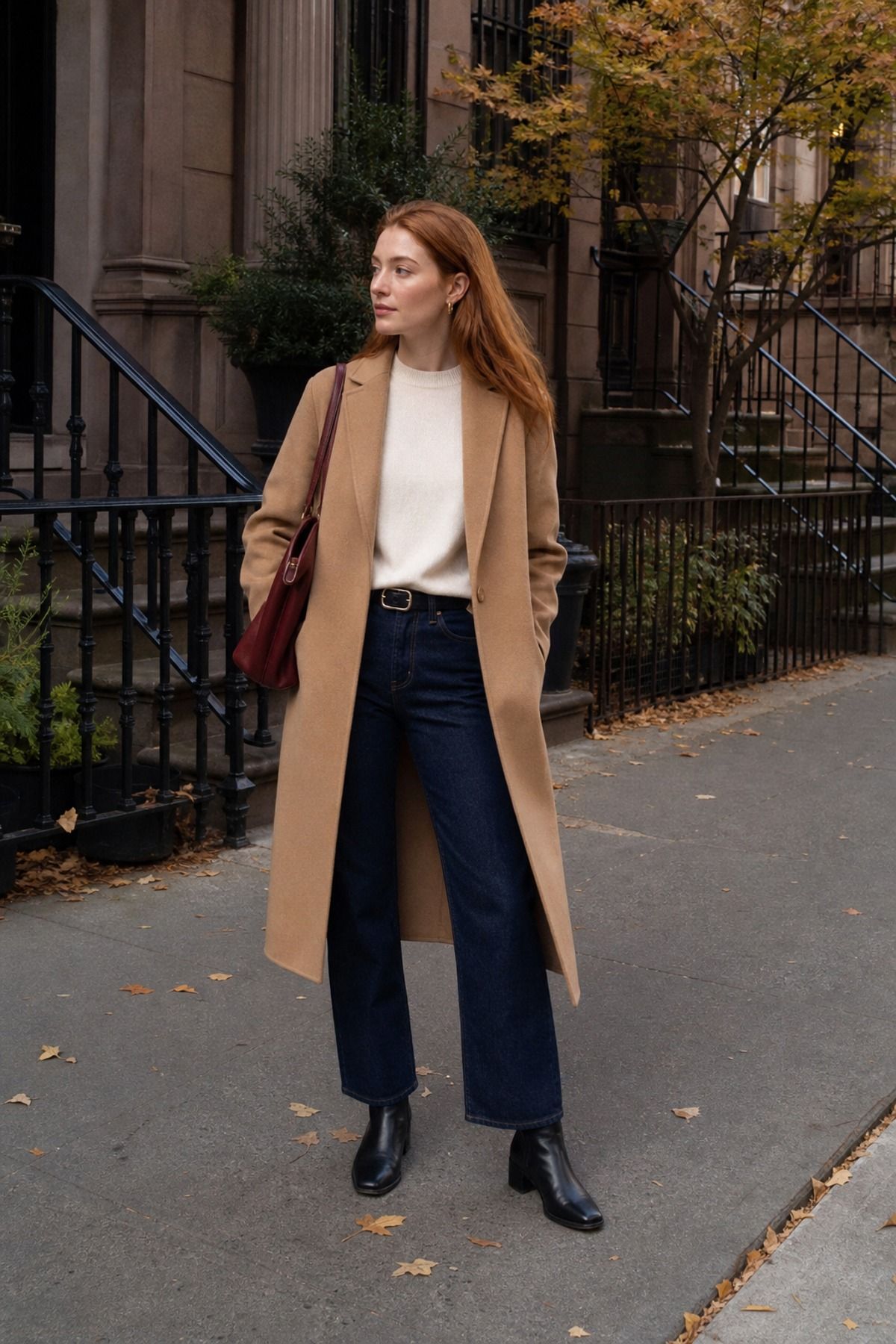

A camel wool coat over dark straight jeans and a cream crewneck is the outfit to build a fall wardrobe around. Add brown loafers or riding boots. The coat should hit at the knee or below, because shorter camel coats lose the effect.
12. Cable knit with wool trousers
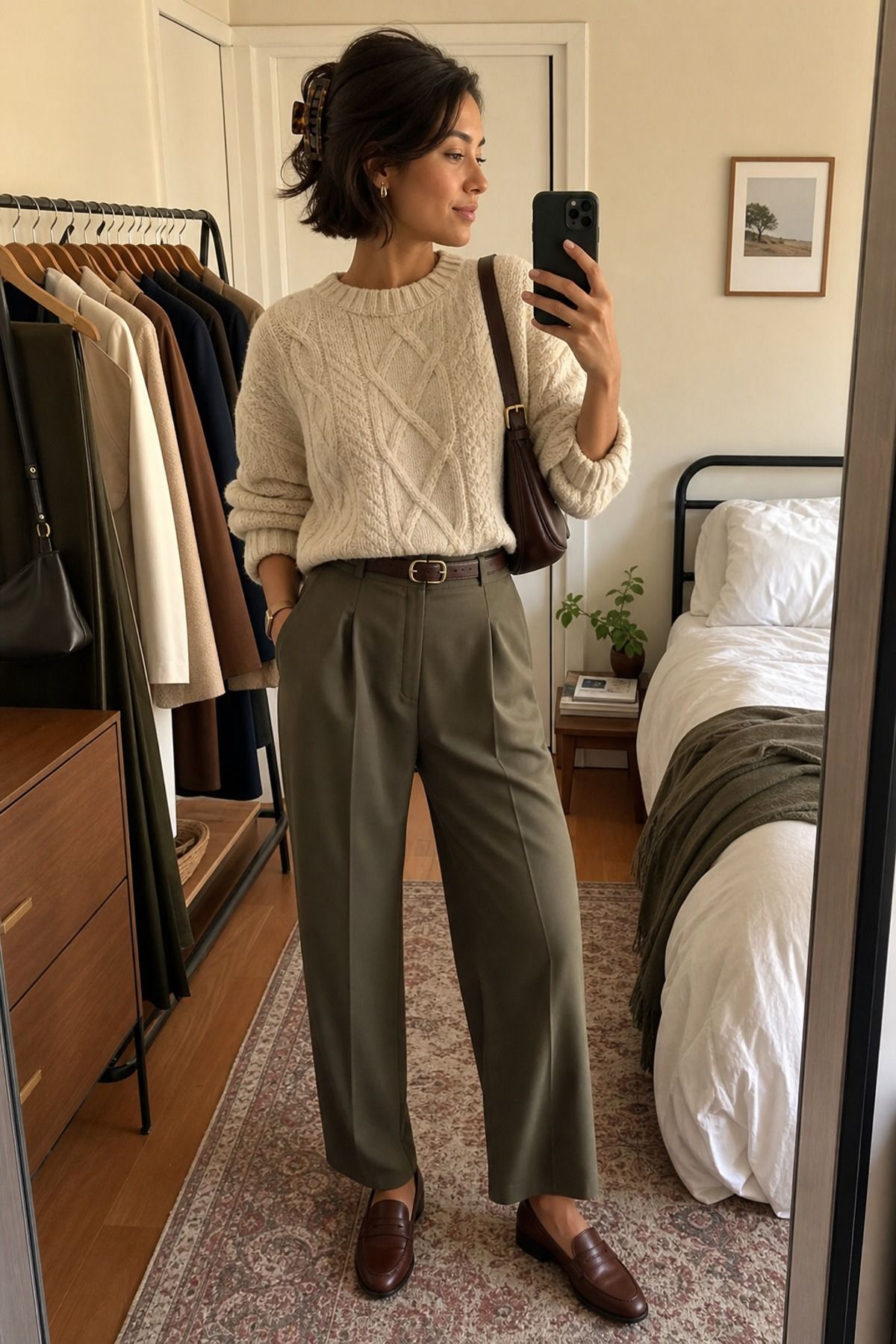


An ivory or navy cable knit tucked loosely into grey wool trousers, with a brown belt showing at the front. Warm, simple and very hard to get wrong.
13. Suede jacket with cream denim
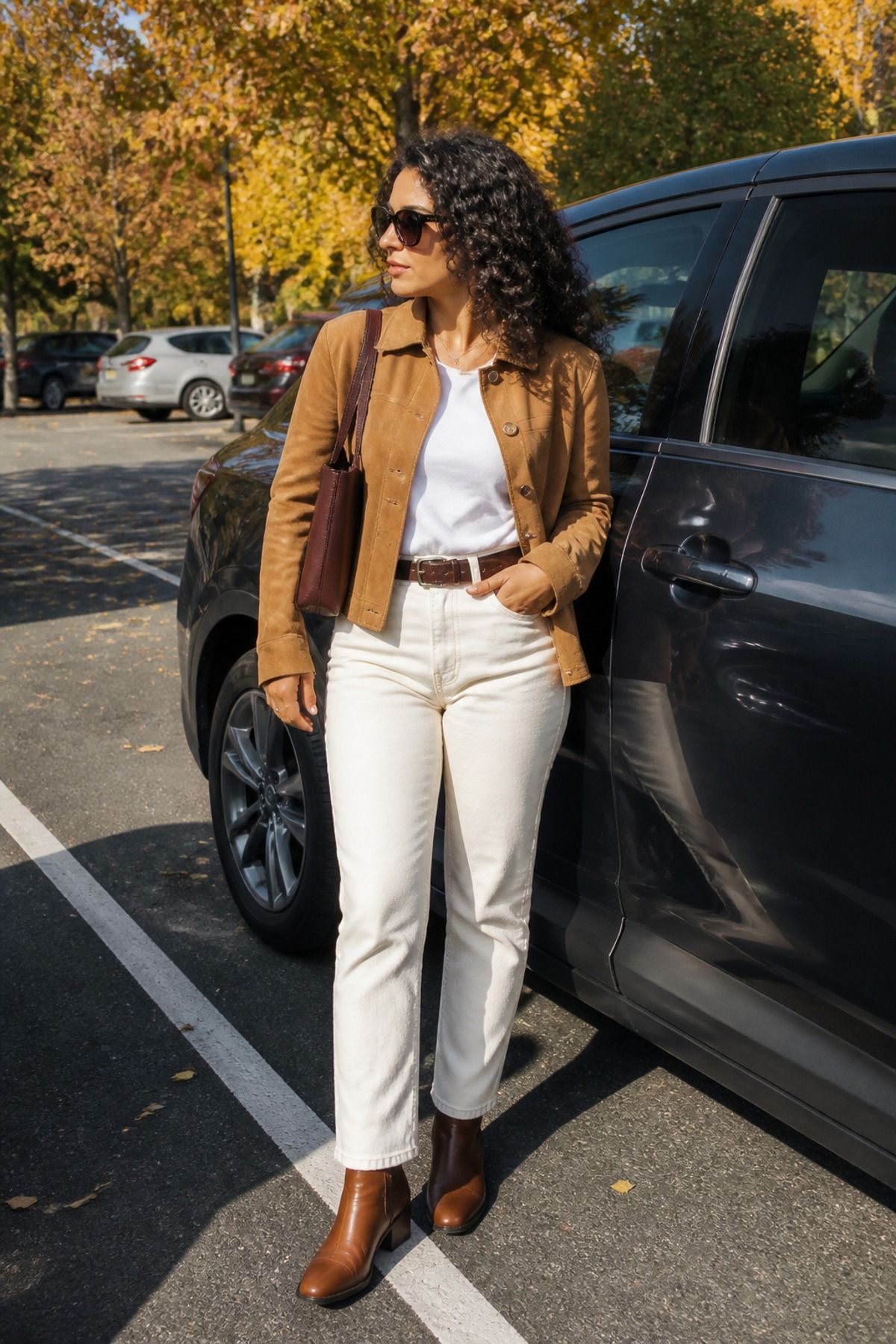


Tan suede with cream jeans is a tonal look that feels rich because of the texture, not the color. Keep the top plain, a white tee or a fine knit. Skip it on drizzly days, since suede and rain don’t get along.
14. Blazer with a pleated skirt



A tweed or check blazer over a pleated midi skirt is the most preppy outfit here. Wear it with loafers, and add opaque tights once it drops below 10°C (50°F).
Winter old money outfits
Winter old money outfits rely on a long wool coat and good knitwear. Charcoal, black, camel and burgundy carry the season, and leather gloves do more for the look than you’d expect.
15. Wool coat with straight jeans
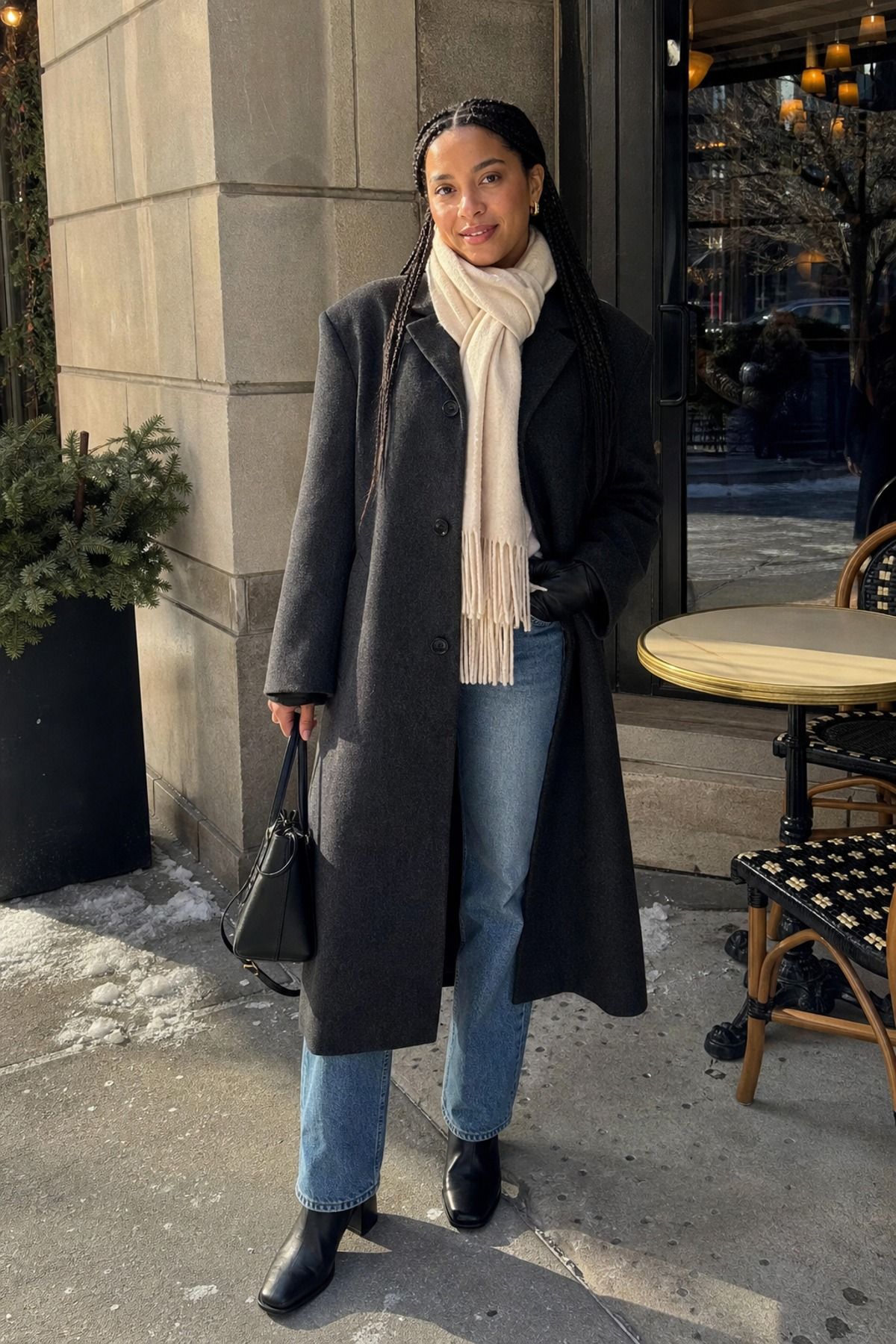
A charcoal or navy wool coat, straight jeans, a turtleneck and leather ankle boots: that’s the winter uniform. Tuck a cashmere scarf inside the coat instead of wrapping it in big loops.
16. Turtleneck with a satin skirt


A fine black or chocolate turtleneck with a satin midi skirt in champagne or deep green works for dinners and holiday plans. Knee-high boots keep it warm and stop the satin from looking like eveningwear.
17. Velvet blazer with black pants
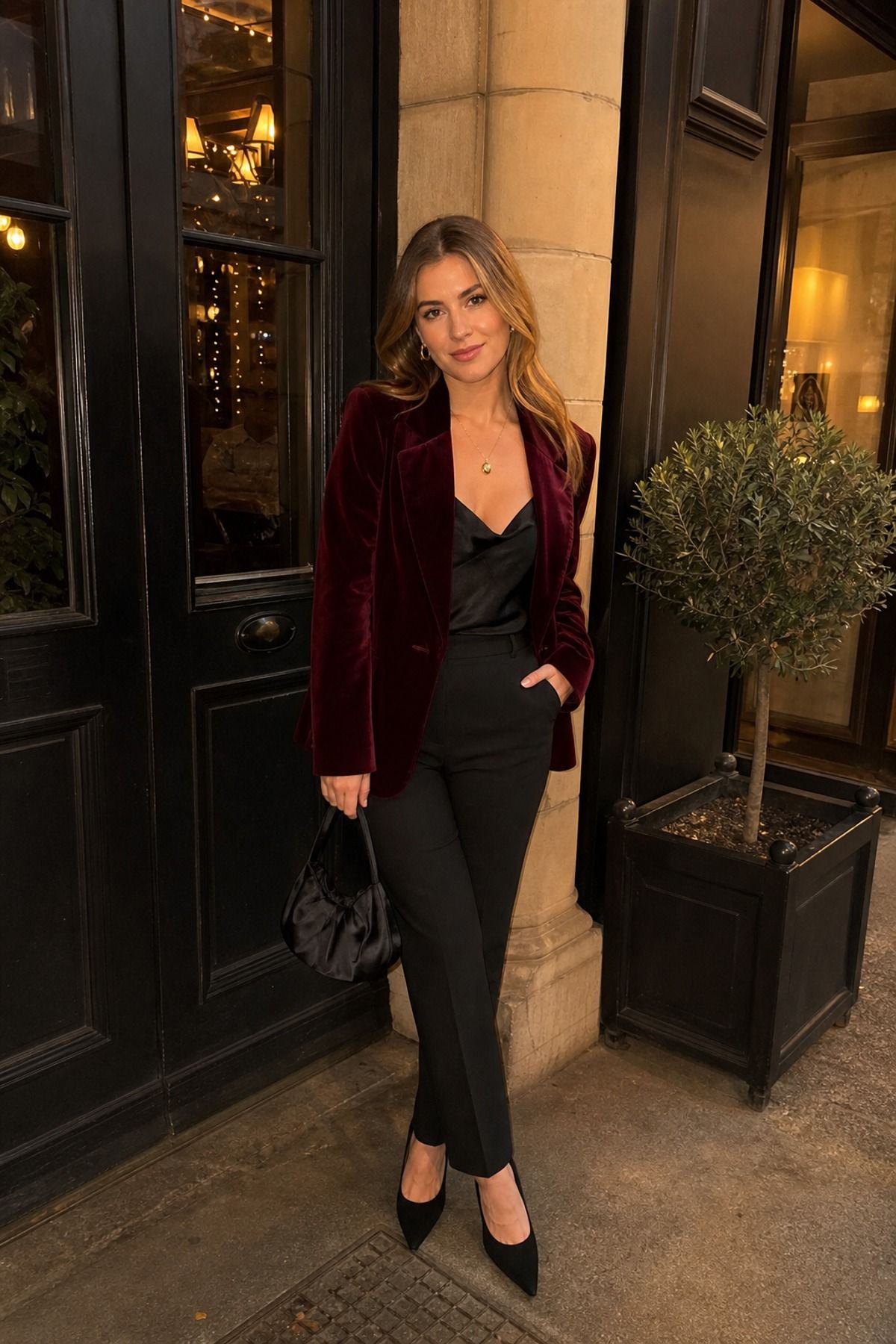


A velvet blazer in navy, bottle green or burgundy over black wide-leg trousers feels festive without a single sequin. Wear a silk camisole or a white shirt underneath and keep the shoes simple, like a pointed flat or a low heel.
18. Knee boots with a sweater dress
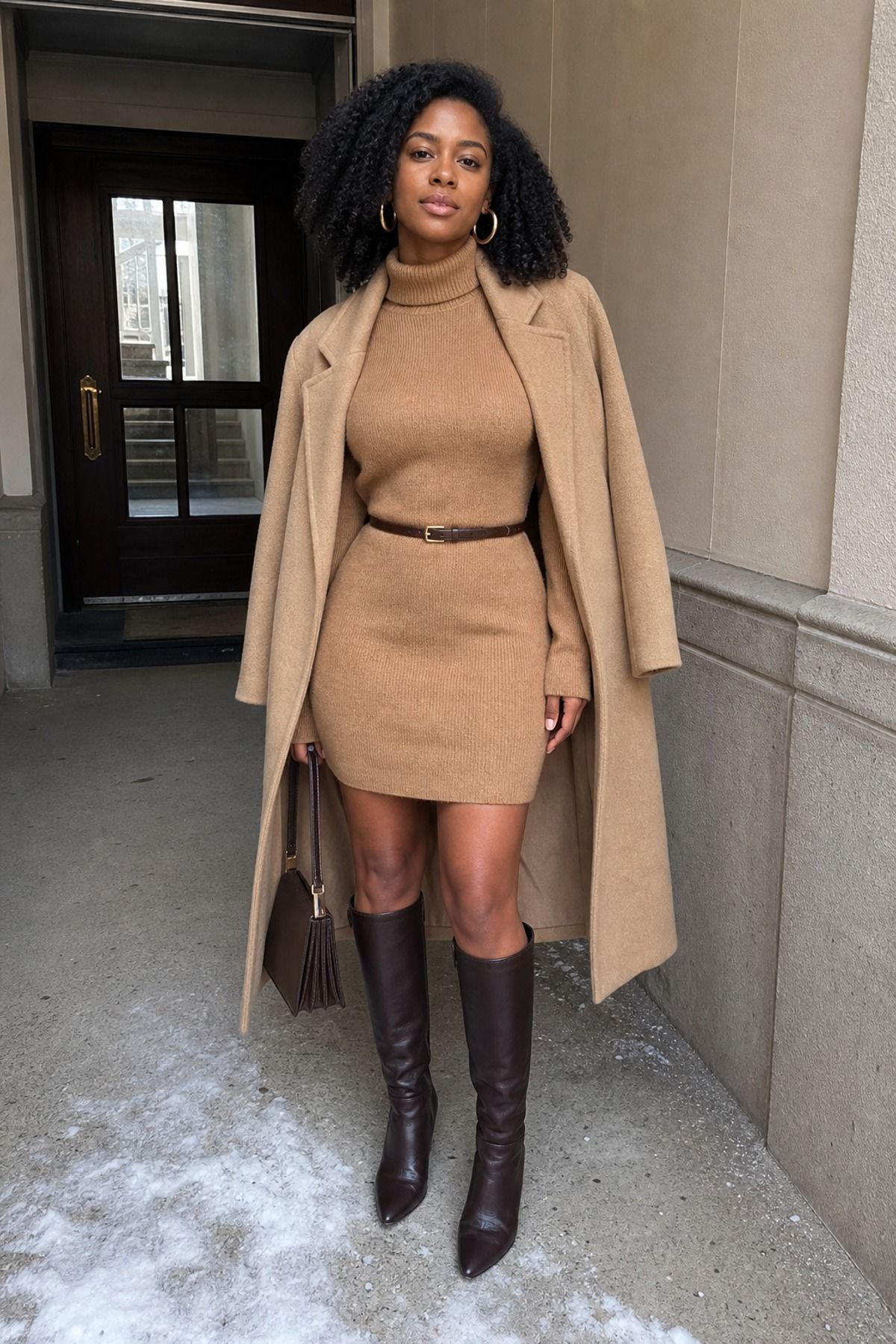
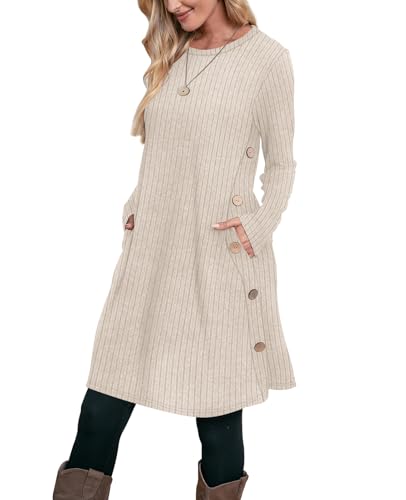


A ribbed sweater dress in camel or grey with tall leather boots. Make sure the boot shaft meets or slips under the hem so there’s no awkward strip of tights. Add a thin belt if the dress needs shape.
When to skip the full look
If your office runs casual or your style is louder, wearing old money head to toe can feel like a costume. Take the useful parts instead: a calm palette, better fabrics and fewer, harder-working pieces. Those work in any wardrobe.
Old money outfits FAQ
What is the difference between old money and quiet luxury?
They overlap heavily. Old money leans traditional and preppy, with cable knits, blazers and pearls, while quiet luxury is more minimal, with clean lines and almost no nostalgia. Both skip logos and put fabric first.
What colors are old money?
Ivory, camel, navy, charcoal, stone and olive form the base. Add one supporting shade like chocolate brown or grey, and a single seasonal accent such as burgundy or forest green in winter.
Can you wear jeans with old money outfits?
Yes, as long as they are dark, cream or white, with a straight or slightly wide leg and no rips. Pair them with a blazer, a cashmere knit or a long wool coat and leather loafers.
What shoes go with old money outfits?
Leather loafers, ballet flats, riding boots and low block or kitten heels cover most outfits. In summer, flat leather sandals and espadrilles take over. Skip chunky trainers with big logos.
How do I dress old money on a budget?
Build around 20 pieces in neutral colors and spend on cashmere, wool and leather, where quality shows. Uniqlo, Quince, Mango and J.Crew cover the basics, and a vintage silk scarf adds a heritage touch for less.
Key takeaways
- Old money outfits rely on fit, fabric and a neutral palette, with no visible logos.
- Five pieces do most of the work: a cashmere crewneck, wool trousers, a camel trench, a silk blouse and leather loafers.
- Spend on cashmere, wool, silk and leather, and save on cotton and linen.
- Each season has an anchor: a trench in spring, linen in summer, a camel coat in fall and a long wool coat in winter.
Which old money outfit should you start with?
Start with the camel coat and dark denim if it’s fall where you are, or the navy blazer with white jeans if it’s spring. Both come straight from the 20-piece capsule, so every other old money outfit here builds on them. Once the basics are in place, these old money fall outfits go deeper into knits, coats and boots for the colder months.
Last update on 2026-10-09 / Affiliate links / Images from Amazon Product Advertising API