

A winter dress needs warmth under it (opaque or fleece-lined tights and a thin turtleneck or thermal), a coat that’s longer than the hem or clearly cropped, and boots that meet the hem. Knit, wool, velvet and heavier cotton dresses handle cold best, and slip or floral dresses work once you layer them.
Tights are sold by denier, and the jump from a sheer 20 to an opaque 80 changes a winter dress outfit more than the dress itself does. In Finland, where January can sit below freezing for weeks at a time, that number is the difference between a dress you wear once and one you keep reaching for until spring.
Most winter dress outfit ideas stop at “add boots,” which leaves you with cold knees and tights clinging to your skirt by lunchtime. Below are 17 dresses with what goes under, over and below each one, plus the tights to pick for each temperature, how to stop static, and how to bring a summer dress into winter without freezing.

What Kind of Dress Can You Wear in Winter?
Knit, wool, ribbed and heavier cotton dresses are the easy ones, because the fabric itself keeps you warm. Satin, florals and shirt dresses work too once you add a turtleneck, opaque tights and a proper coat.
1. Sweater Dress With Knee-High Boots
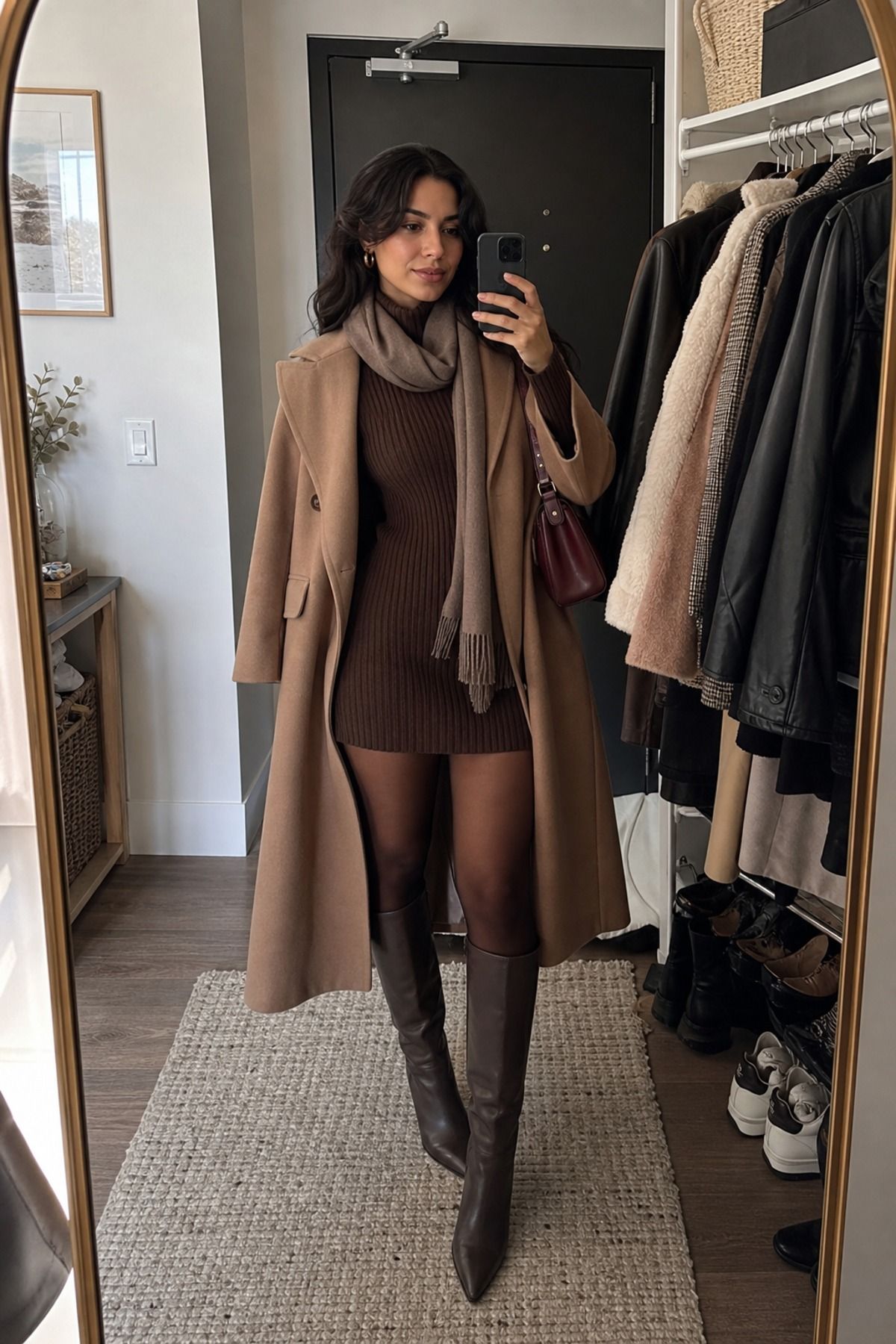
A sweater dress with knee-high boots covers almost every inch of you in something warm, knit on the body and leather on the shins, so only the knees need help. That’s why it’s the first winter dress outfit most people reach for.
With a short sweater dress, the boots matter more than the dress. A shaft that stops just below the knee leaves a small gap you can close with brown or black tights, and keeping the tights, boots and dress in the same color family makes your legs look long instead of chopped into sections. If you need help picking the boots, my tall boot outfits go through shaft heights and widths.
On colder days, swap sheer tights for opaque ones and add a long coat that covers the hem. It feels like wearing a blanket with a waist.
2. Ribbed Midi Dress With a Wool Coat
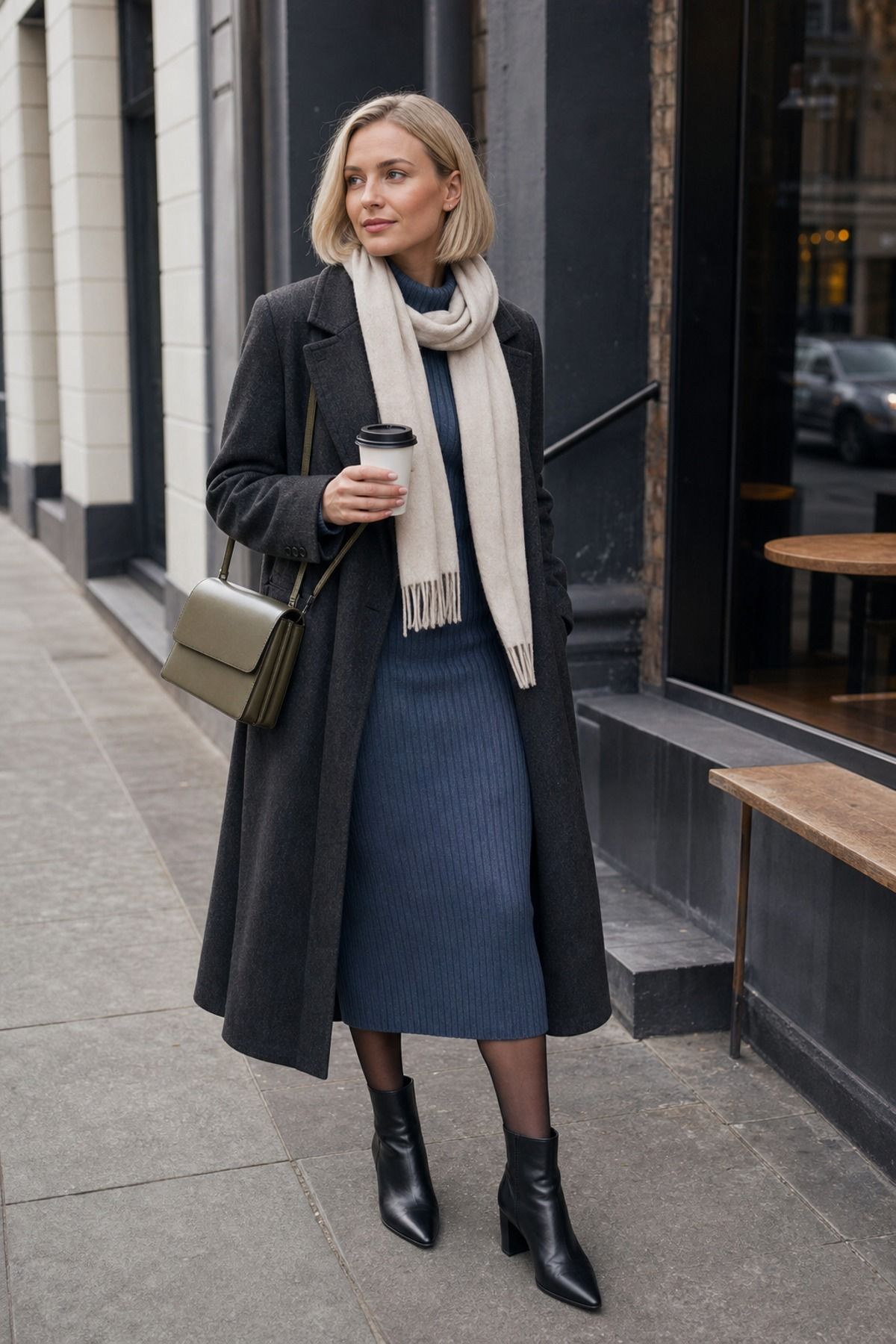
Why does a ribbed midi look so neat under a coat? The ribs run up and down and the dress makes one long line, and a long wool coat repeats that line on the outside. Make sure the coat is longer than the dress, because a hem peeking out under a coat looks like a mistake even when it isn’t.
Navy with charcoal is a nice quiet pairing for an office or a weekday dinner, and a cream scarf lifts it near your face. Choose a rib with some thickness so it skims rather than clings, and ground it with heeled ankle boots. More length tips are in my midi dress styling notes.
3. Slip Dress Over a Turtleneck
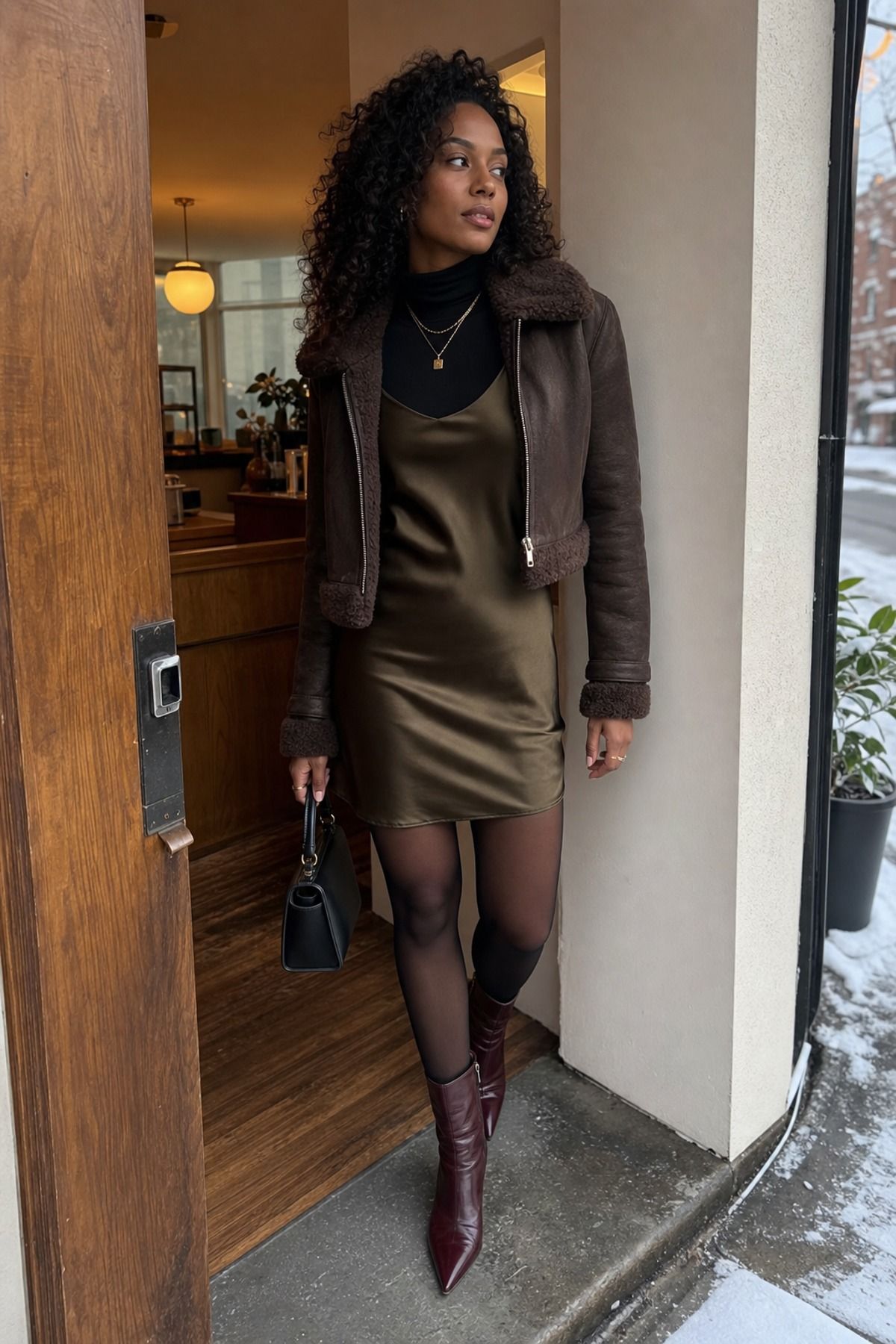
Layering a thin turtleneck under a satin slip dress is the easiest way to take a party dress into January and into daylight. Keep the knit fine, merino or a thin cotton blend, so it lies flat under the straps instead of bunching at the armholes, and match it to the tights so the dress floats in the middle of the outfit. A short shearling jacket gives satin something rough to sit next to, which stops the whole thing looking like a nightgown. Satin shows every crease and static spark, so this one likes a half slip underneath (more on cling below) and opaque tights once it drops below freezing.
4. Shirt Dress With Tights and Loafers
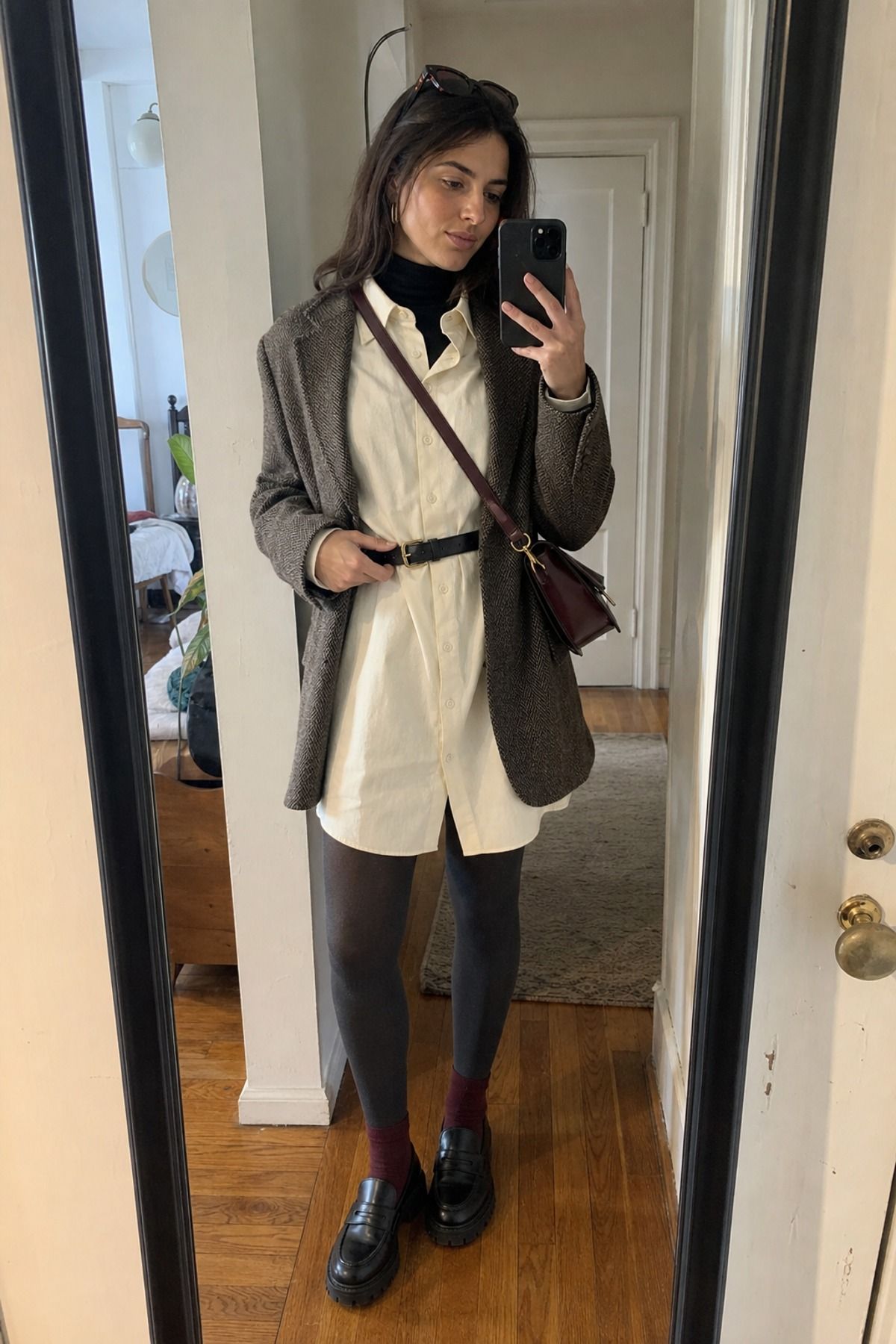
A heavier cotton or wool-blend shirt dress is one of the best office dresses for winter, because it already looks like workwear and layers like a shirt. What turns it into a winter outfit:
- A fine turtleneck underneath, so the collar sits over a warm neck
- A belt at the waist so a loose dress keeps some shape
- Gray or black opaque tights, with a colored sock peeking out of loafers if you like a little fun
- A blazer or cardigan on top indoors, and a long coat for the commute
5. Floral Midi Dress With a Leather Jacket

Can a floral dress work in winter? Yes, if the flowers sit on a dark background. A burgundy, navy or black floral looks right in December in a way that a pastel one just doesn’t, and a black leather jacket toughens it up so it reads as a city outfit instead of a garden party.
Knee-high boots under a midi hem close the gap completely, so you only need tights for warmth, not for looks. Leather jackets are cold on their own below about freezing, so on properly wintry days wear a thin knit under the dress or put a long coat over the whole thing and let the leather wait for milder weeks.
6. Black Knit Dress With a Belted Coat

A belted coat gives a little black knit dress its shape back, even when the coat is closed and the dress is hidden. Tie the belt rather than buckling it, so it sits softly at your waist, and pick a dress with a higher neckline for warmth, since the coat collar does the rest. Cream over black is a crisp contrast that photographs well on dark days, and a printed scarf like leopard adds interest without needing jewelry. Brown suede boots soften all that black and cream, but suede and slush don’t mix, so save this for dry evenings and switch to leather boots when the sidewalks are wet.
Which Winter Dresses Work From Errands to Holiday Dinners?
Denim and hoodie dresses cover the casual days, while velvet and plaid handle the dressier ones. The warmth plan stays the same for all of them: something on your neck, opaque tights, and boots that reach the hem or close to it.
7. Denim Dress With a Turtleneck
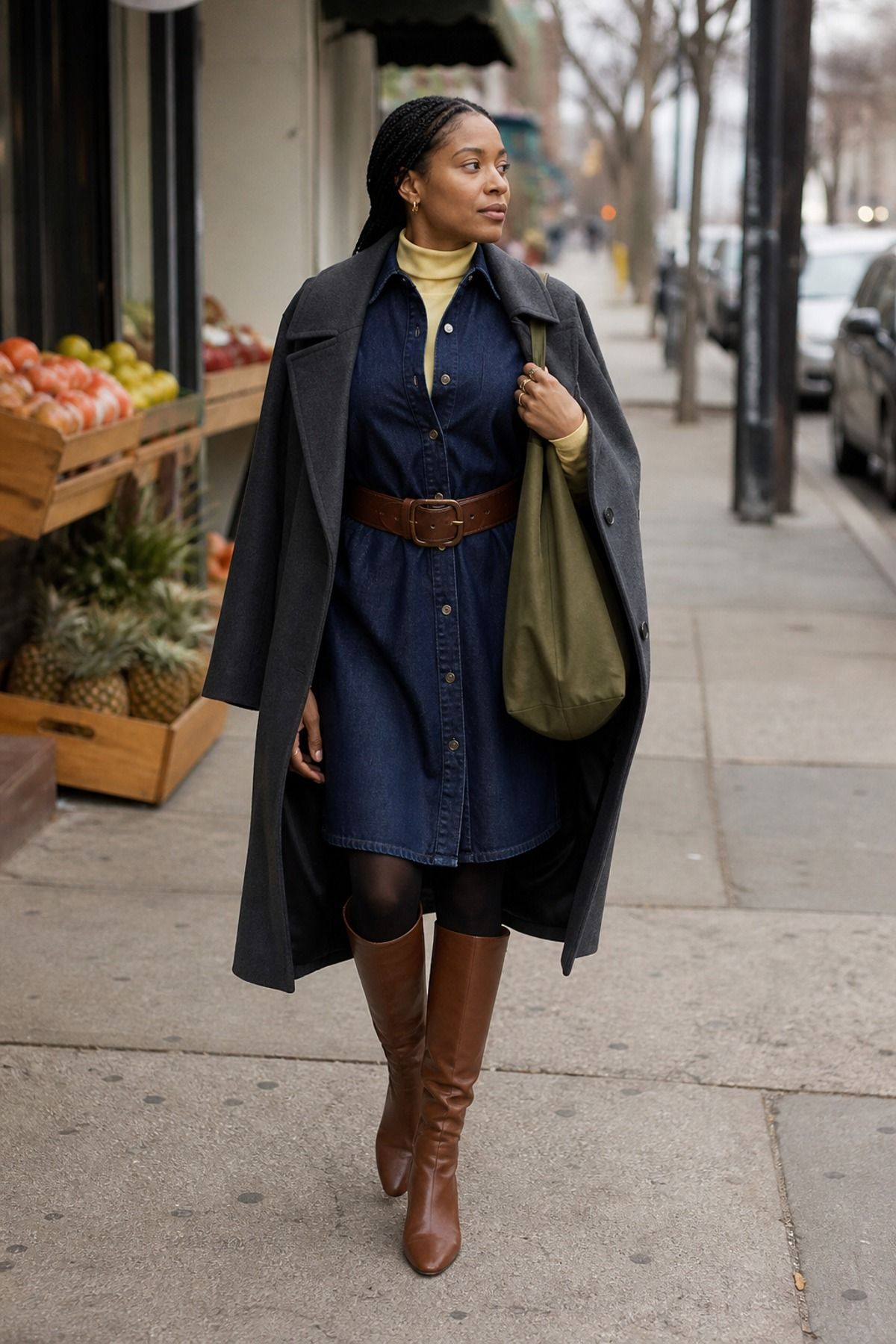
A denim dress over a turtleneck is the friendly, casual way to wear a dress in winter, the one you can do school pickups and grocery runs in without anyone asking where you’re going. It’s also forgiving, since denim doesn’t show creases or static the way thinner dresses do.
You need enough room in the chest and arms to fit a knit underneath without the buttons pulling, so try it on with the turtleneck you’ll actually wear. A mustard or rust neck under mid-blue denim adds warmth in color as well as in fabric.
A belt keeps all that room from turning shapeless, and tall brown boots finish it. Flat boots are the practical choice here, since this is a walking outfit, and a long dark coat covers everything when the wind picks up.
8. Velvet Dress With Black Tights

Velvet looks wintry before you’ve added a single accessory, which makes a velvet dress the lowest-effort holiday outfit there is. Plum, emerald, burgundy and black all glow under restaurant lights, and black tights with black shoes keep the line long under a short hem.
For a holiday dinner or a work party, sheer tights look dressier; for the walk there in real cold, opaque or fleece-lined tights are kinder, and you can change in the bathroom if you care that much (some of us do). Keep jewelry small, because velvet already reflects light, and choose a long coat that covers the dress completely, which keeps the fabric from getting crushed under a seatbelt.
9. Hoodie Dress With a Puffer Vest

For errands, dog walks and long car days, a hoodie dress with a puffer vest is about as warm and easy as a dress can get. The hoodie dress is basically a long sweatshirt, so treat it like one: wear thick leggings or opaque tights under it, pick one that reaches at least mid-thigh, and add a vest so your core stays warm while your arms stay free. Chunky sneakers with white socks keep it sporty, and a beanie in a deeper color, burgundy for example, makes the gray look planned. When there’s snow on the ground, swap the sneakers for waterproof boots, because canvas and slush only end one way.
10. Plaid Dress With Tall Boots
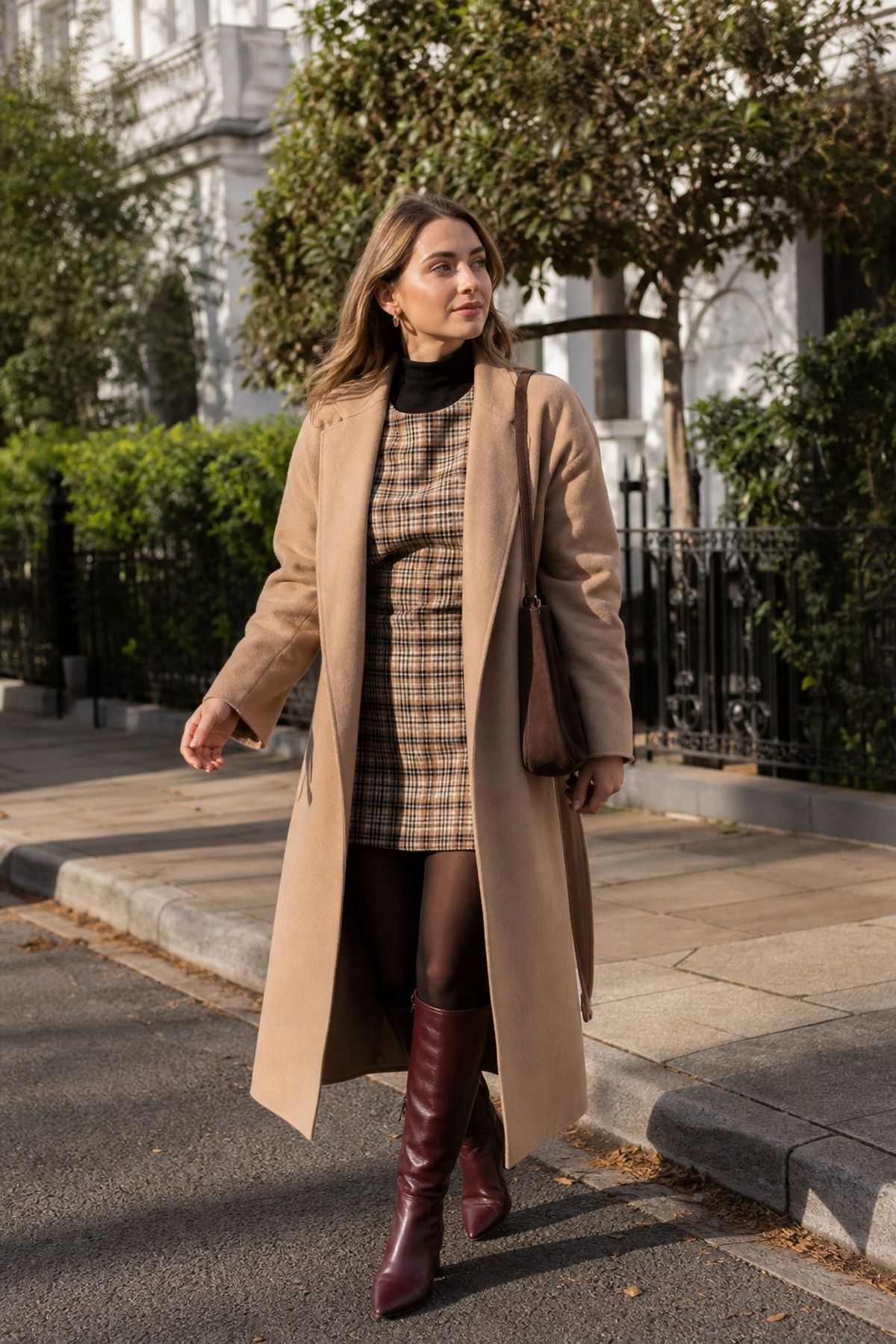

Plaid looks like cold weather all on its own, so a plaid dress needs very little help:
- A black or brown turtleneck under it if the dress is sleeveless or thin
- Opaque tights in a dark color from the check
- Tall boots in a color pulled from the plaid, burgundy with a red check for example
- A camel or charcoal coat long enough to cover the hem
Keep accessories quiet if the check is bold. One pattern per outfit is plenty, and plaid already counts for two. If you want a second texture, let it be a knit or a leather bag instead of another print.
How Do You Layer Over and Under a Dress When It’s Freezing?
Thin layers go under, thick layers go over. A turtleneck or thermal under the dress and fleece-lined tights below keep you warm close to your skin, and a sweater, cardigan or teddy coat on top adds texture without squashing the dress.
11. Column Dress With a Cropped Sweater
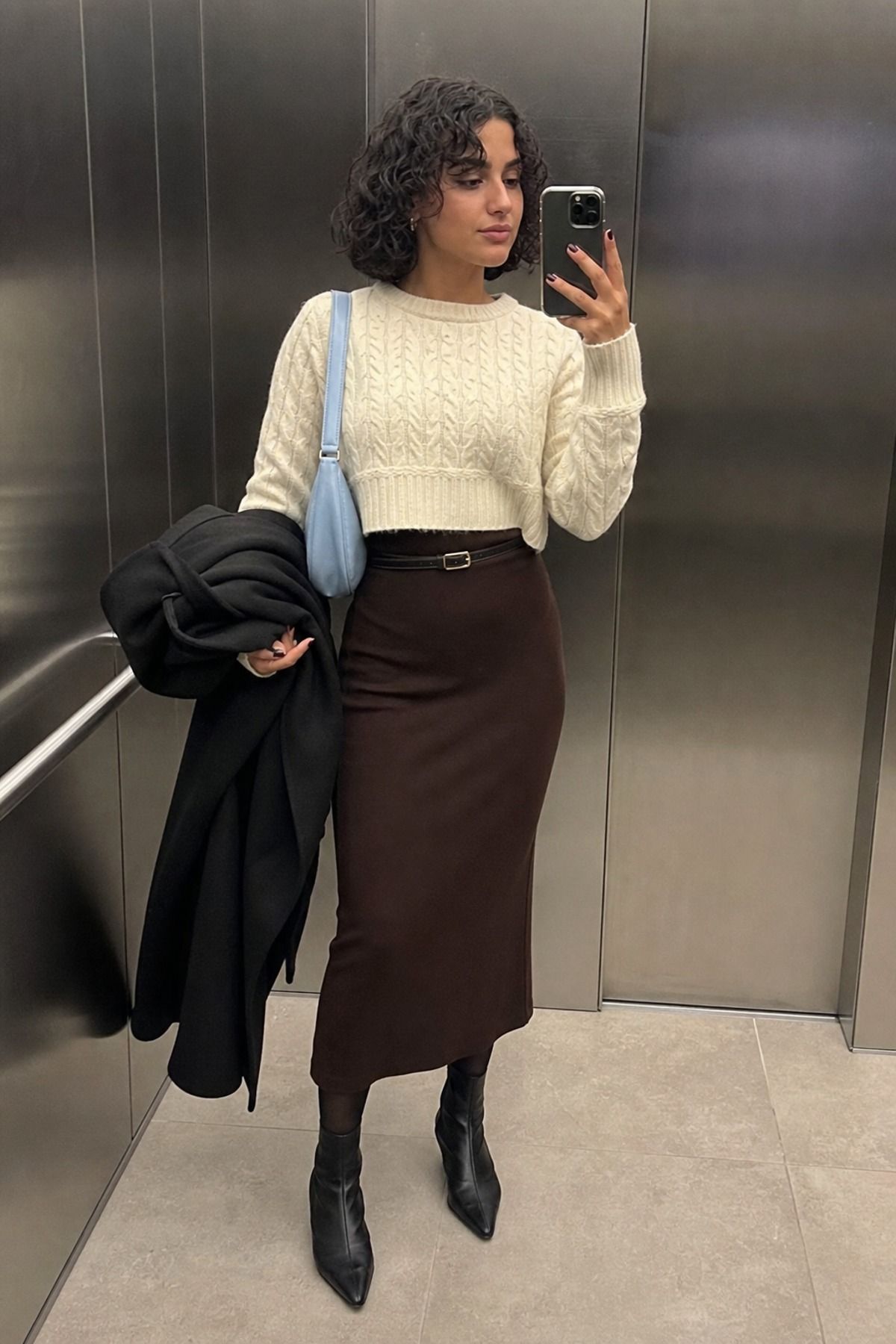
Pulling a cropped sweater over a column dress changes the whole shape, so the outfit looks like a skirt and top instead of a dress. Pick a sweater that ends at your natural waist, because one that stops lower makes your legs look short and one that’s higher shows the dress’s bodice in an odd spot.
It’s a smart way to get two outfits out of one dress, and a chunky cream cable over a long dark dress feels cozy and dressy at the same time. Pointed ankle boots keep the column line long, and a long coat over your arm finishes the look for the walk. It works for a winter lunch, a gallery or an office party.
12. Wrap Dress With a Long Cardigan
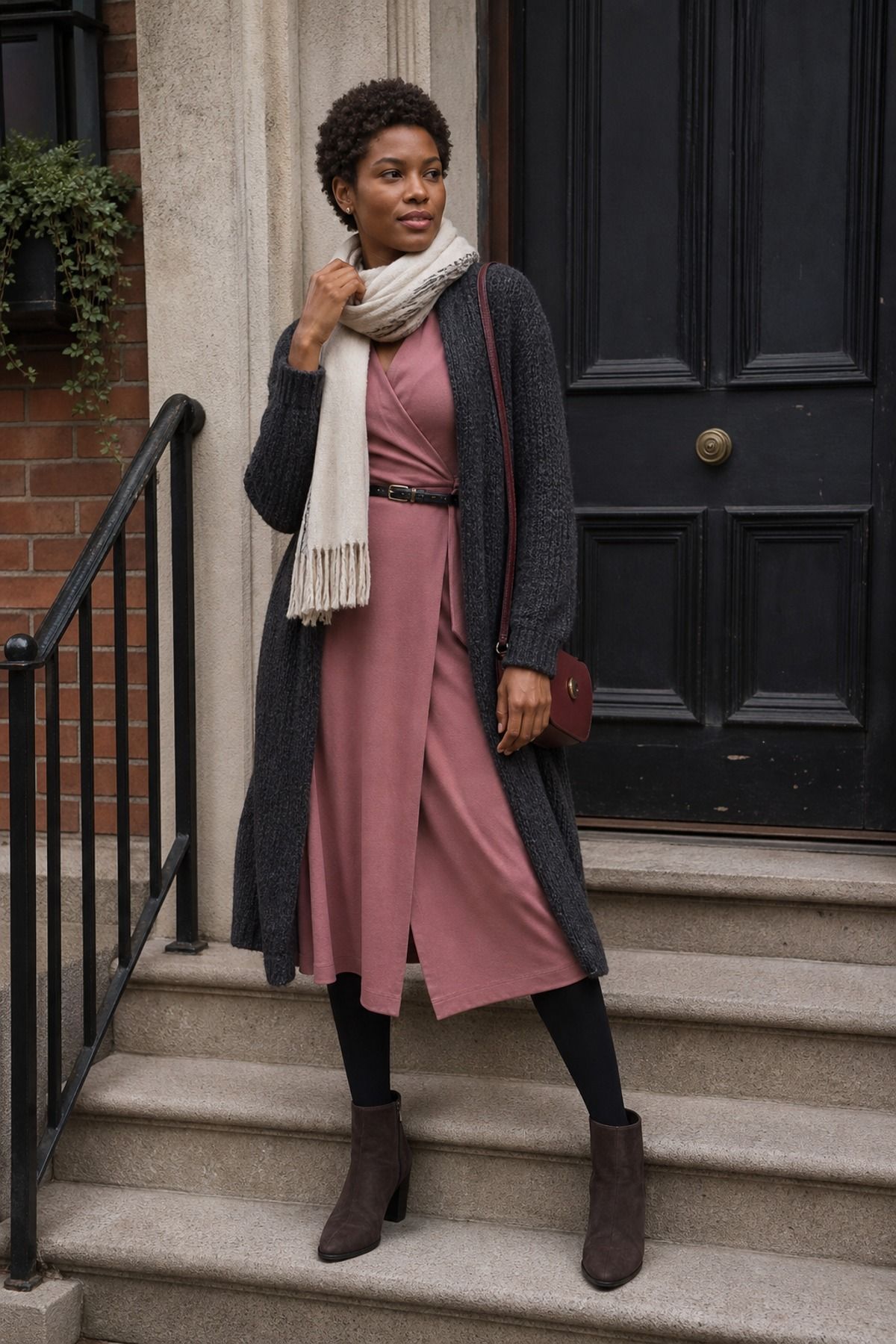
Wrap dresses are made for layering over, and a long cardigan is the softest way to do it in winter. Check that the neckline stays put first, because a wrap that slips open is cold and fiddly; a small safety pin inside fixes it in two seconds. A charcoal cardigan that hangs to about the same length as the dress keeps the line long, and black tights with brown ankle boots are a nice change from all-black legs. The dusty rose dress shows how a soft color looks grown-up next to charcoal, and a cream scarf keeps your neck warm without adding another color to think about.
13. Pinafore Dress With a Fine Knit
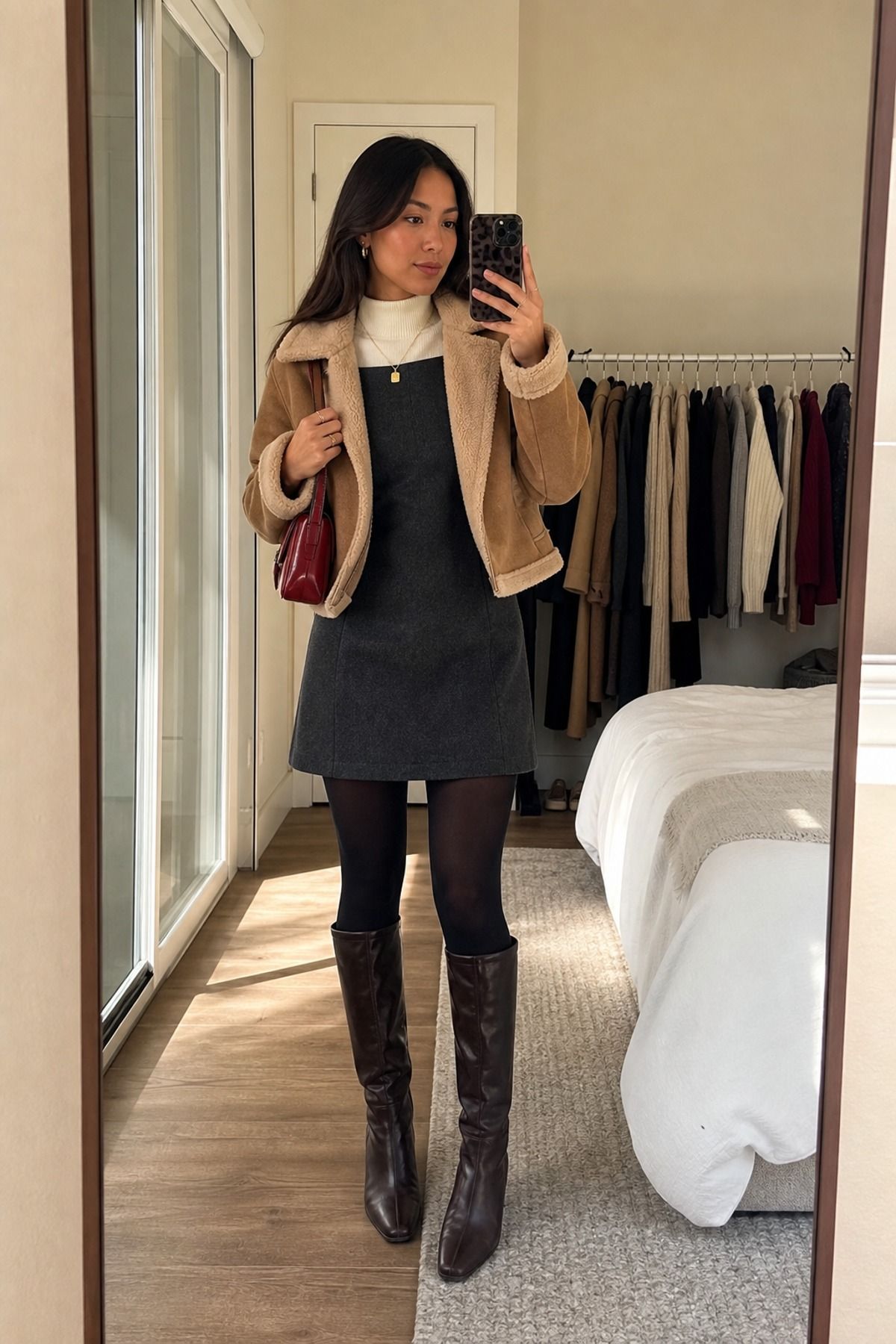
How do you keep a pinafore from looking like a school uniform? It’s all in what goes under and over it.
A fine cream turtleneck under a charcoal wool pinafore looks grown-up, while a chunky knit or a collared shirt pushes it straight back toward the classroom. A short shearling jacket adds a casual, outdoorsy edge, and tall brown boots over black tights finish the line.
Pinafores in wool or corduroy are warm in the body and easy to layer, but check the bib doesn’t pull across your chest once a knit is underneath. It’s a fun outfit for weekends and creative offices, and a slightly shorter hem with knee-high boots keeps it from feeling too sweet.
14. Maxi Dress With a Teddy Coat
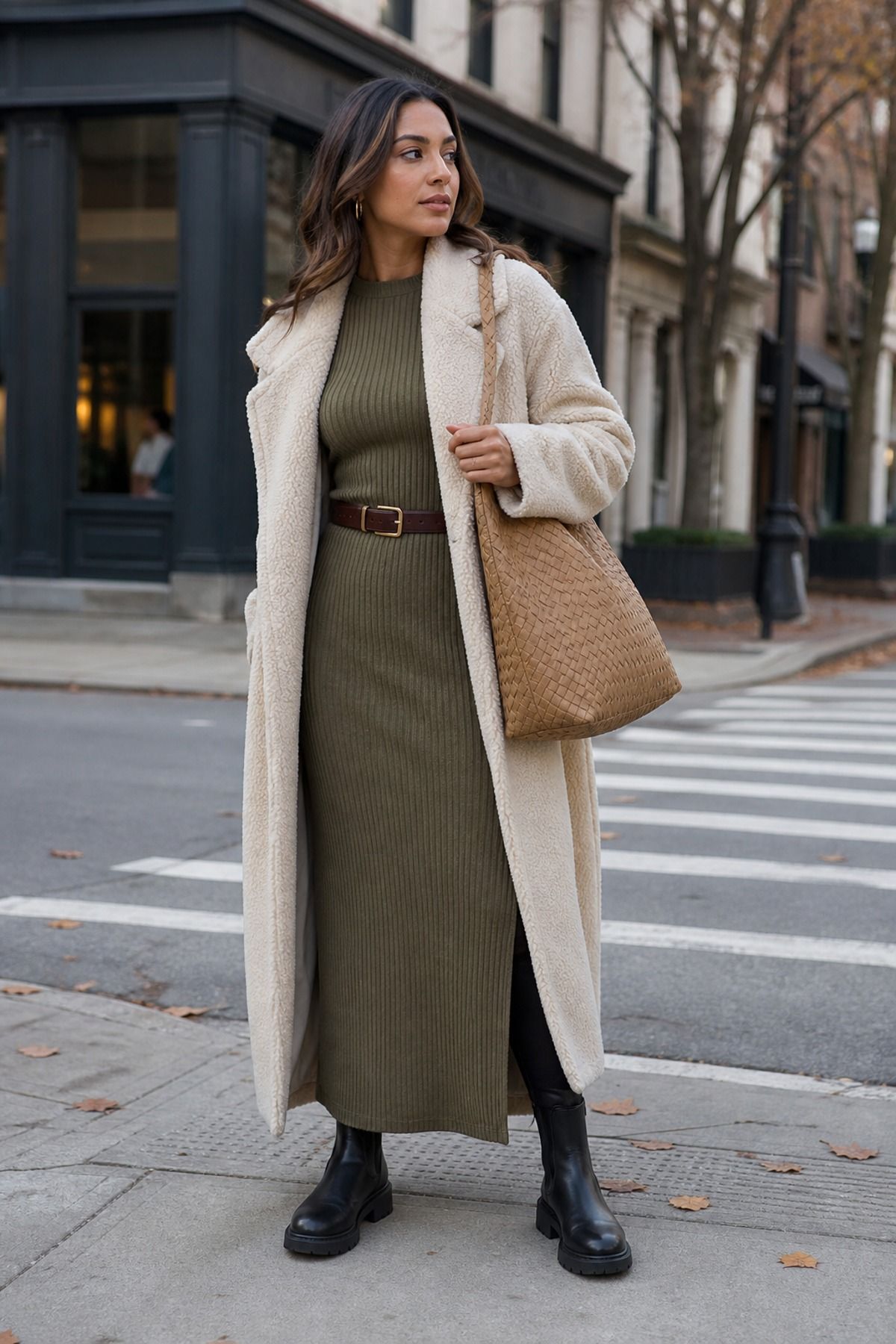
A long teddy coat makes a maxi dress feel cozy, and the two lengths together keep you covered from neck to ankle. Pick a maxi that clears your boots by a couple of inches, otherwise the hem drags through slush, and choose chunky lug-sole boots, which give a long dress some weight at the bottom.
An olive rib knit under cream teddy is a calm, warm-looking pairing, and a slim belt on the dress stops all that length from looking like a column of fabric. A structured bag balances the softness of the coat. On very cold days, wear leggings or thermal tights under the maxi, since nobody will see them.
15. T-Shirt Dress With Thermal Layers

A t-shirt dress isn’t a winter dress on its own, but it becomes one with the right layers, and it’s handy if you already own a few in dark colors:
- A long-sleeve thermal under it, so your arms and shoulders stay warm
- Black leggings or fleece-lined tights below
- A cropped puffer on top, which shows the dress instead of swallowing it
- A big scarf and lug-sole boots for snow and slippery steps
It’s a laid-back weekend outfit, and an easy one to sit down in on a cold stone bench (warm leggings help a lot with that part).
16. Cream Sweater Dress With Brown Boots
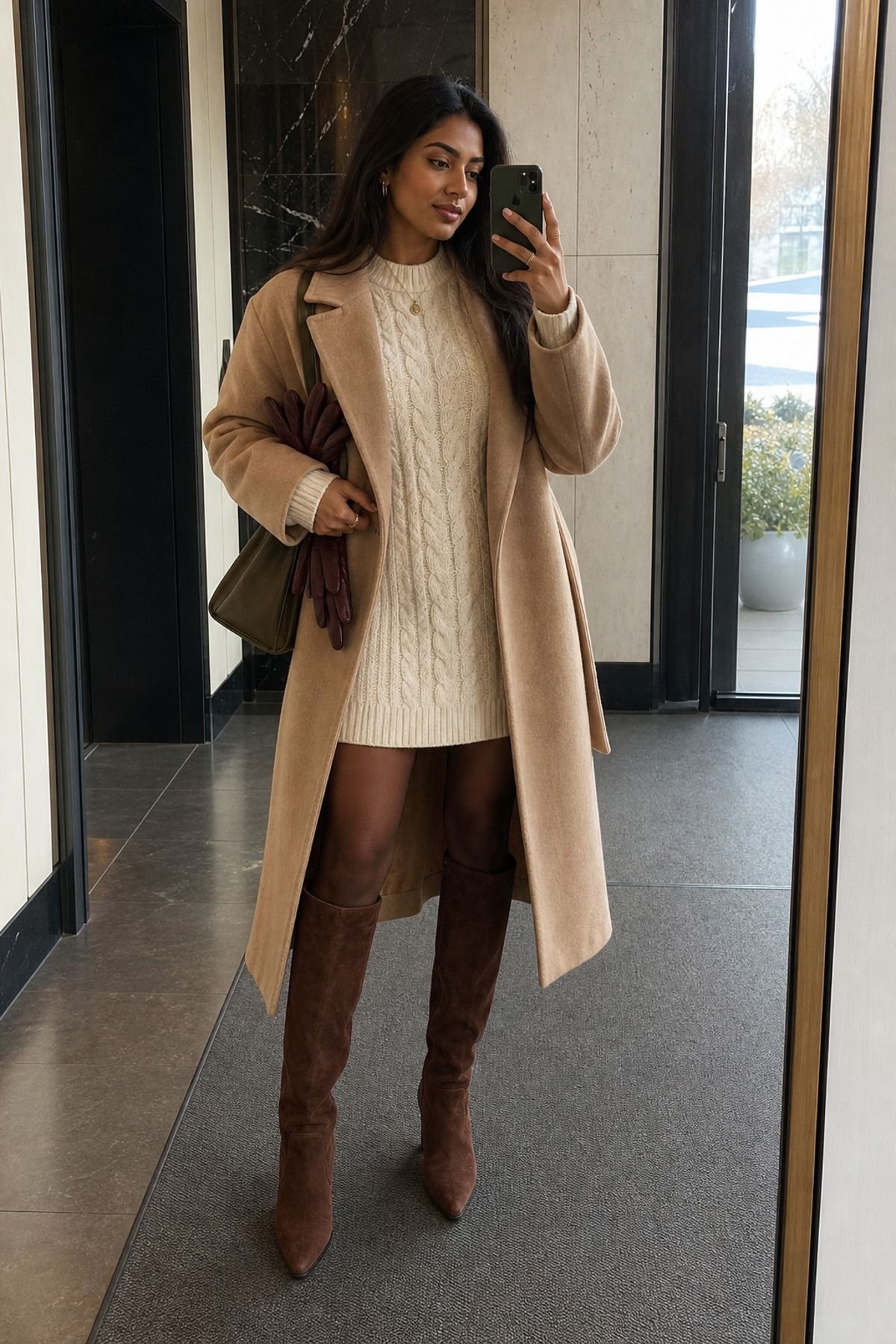
Cream with brown is one of the warmest-looking color pairings you can wear in winter, and a cream cable sweater dress with brown knee-high boots shows it off. Choose a knit thick enough that it isn’t see-through under daylight, and add brown boots and a camel coat to keep the whole outfit in one warm family. Brown tights blend into brown boots better than black ones do, which keeps your legs looking long. Wear this one on dry days and keep it away from salty sidewalks, because cream knit and slush splashes are a tough pair to separate later.
17. Satin Dress With a Chunky Knit

Throwing a chunky knit over a satin dress is how a party dress gets a daytime life. The rough knit next to shiny satin is what makes it interesting, so go big on the knit, a burgundy cardigan for example, and keep the dress simple and long.
A fitted black top under the slip adds warmth and covers your shoulders, and brown boots under the hem keep the outfit practical for walking. Choose a cardigan that ends at the hip rather than one that covers the dress halfway down, so the satin still shows. This works for a holiday lunch, a winter wedding afterparty or any dinner where you want shine without shivering.
What Do You Wear Under a Dress in Winter?
Opaque tights, a thin top layer and, on the coldest days, a slip or leggings. What you need depends mostly on the temperature:
- Above about 50°F (10°C): sheer tights or bare legs with boots are fine for short walks.
- Around 35 to 50°F (2 to 10°C): opaque tights of about 40 to 60 denier, and a fine turtleneck or long-sleeve layer under thinner dresses.
- Around freezing and below: 80 denier and up, or fleece-lined tights, plus a thermal top under the dress.
- Long or maxi dresses: thermal leggings fit underneath without anyone seeing them.
A fitted base layer should be thin enough that the dress still hangs properly. If the dress starts pulling at the seams, the layer under it is too thick.
How Do You Stop a Dress From Clinging to Your Tights?
Put a layer between them. A half slip or a lined dress stops most cling, and anti-static spray on the inside of the skirt helps with satin and knits. Static is worse in dry, heated rooms, so you’ll notice it most indoors in midwinter. Tights with a bit of cotton or wool tend to grab less than shiny nylon ones, and a dress that skims instead of hugging has less to stick to in the first place.
Frequently Asked Questions
How cold is too cold to wear a dress?
With opaque or fleece-lined tights, tall boots and a long coat, you can wear a dress well below freezing for normal walking around town. Bare legs and sheer tights are only comfortable for short walks above about 50°F (10°C).
What tights should I wear with a winter dress?
Opaque tights of 40 to 60 denier work for most cold days, and 80 denier or fleece-lined ones for freezing temperatures. Match them to your boots, black with black or brown with brown, so your legs look long.
What shoes go with dresses in winter?
Knee-high boots are the warmest choice because they cover your shins. Ankle boots, lug-sole loafers and winter sneakers also work, as long as your tights are warm enough for the gap.
Can you wear a summer dress in winter?
Some summer dresses work with layers. Slip dresses, shirt dresses and dark florals look good over a turtleneck with opaque tights and boots, while very sheer or bright beach prints are harder to make look wintry.
What coat goes with a dress?
Pick a coat that is longer than the dress or clearly cropped above the waist. A long wool coat, a teddy coat or a short leather or shearling jacket all look deliberate, while a coat that ends just above the hem looks unfinished.
Can you wear a sweater over a dress?
Yes, and it’s an easy way to make a thin dress warmer. A cropped sweater or a cardigan that ends at the hip keeps the dress visible, while a long, heavy knit can hide it completely.
Key Takeaways
- Cover your legs first: opaque or fleece-lined tights and boots that meet the hem.
- Thin layers go under the dress, thick ones over it.
- Choose a coat longer than the dress or clearly cropped.
- A half slip or a lined dress stops tights from clinging.
Which of Your Dresses Gets a Winter Second Life?
Most of us have a dress or two that only comes out in July, and plenty of these winter dress outfit ideas are really just ways to give those a second season. So which one is it for you, the slip dress that’s waiting for a turtleneck, or the floral that needs a leather jacket and tall boots? Try it on tonight with your warmest tights and see. If you’d rather wear separates, my winter skirt outfits use the same tights and boots.
Last update on 2026-11-24 / Affiliate links / Images from Amazon Product Advertising API