

Personal finance rules save money when they function as flexible guidelines rather than rigid commandments. 50/30/20 is the starting frame. The 20% savings line is the actual non-negotiable. The wants line flexes around it. The high-cost-of-living adjustment matters.
The 50/30/20 rule is the personal finance rule that dominates almost every social media budget tutorial, and it is also the rule that quietly fails the largest number of people the way it is typically taught. The rule allocates half of after-tax income to needs, roughly a third to wants, and the remainder to savings and debt payoff.
The math works cleanly in the example budgets that populate the financial influencer corner of the internet. The math does not work cleanly for the average American household, where housing alone now runs at roughly a third of income, which means the needs bucket is gone before utilities, insurance, transportation, or groceries get accounted for.
Personal finance rules genuinely help you save money when they function as flexible guidelines rather than rigid commandments and when they get adjusted to the actual conditions of the life being lived. The 50/30/20 rule is the starting frame; the high-cost-of-living adjustment is required for the vast majority of real households.
The 20% savings line is the actual non-negotiable; the wants line flexes around it. The pay-yourself-first rule, the 24-hour rule, the rule of 25 for retirement, the 1% raise, and the 3-6 month emergency fund are the other rules worth installing.
The rules that produce actual saving are the ones implemented at the bank with automation, not the ones held in mind as good intentions across the month and broken at the checkout.
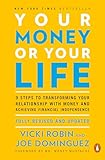
Recommended Personal Finance Books at a Glance
Five canonical books behind the budgeting-rules approach. The numbered rules further down are the actual practice.





Recommended blogs to read:
- Personal Finance Tips That Changed How I Manage Money
- Personal Finance Books That Change How You Think About Money
- A Biweekly Savings Plan for Low Income Budgets
- Smart Money Habits That Actually Build Wealth
- Smart Financial Habits to Master at Every Age
- living paycheck to paycheck without falling behind
- the no shop reset for a calmer relationship with money
Why Rigid Rules Fail and Flexible Rules Save Money
The rigid 50/30/20 framing produces a predictable failure pattern. The reader applies the rule to a real income, discovers that housing already consumes more than 50% of net pay, concludes the rule does not work, and abandons the budgeting attempt entirely.
The rigid framing teaches the reader that budgeting is for other people with simpler housing markets. The flexible framing produces the opposite result. The reader applies the rule as a starting frame, identifies that needs run at 65% in their actual life, adjusts the bucket allocations to 65/15/20, and successfully implements a working budget that holds the 20% savings line as the non-negotiable.
The flexible version saves the money. The rigid version produces the abandonment.
The other failure pattern is the rules-without-automation pattern. The reader internalizes the pay-yourself-first rule and the 24-hour rule and every other rule, but never actually sets up the automation at the bank that would make the rules default behavior.
The rules live in the mind as good intentions; the spending decisions get made in real time without the rules ever being invoked. David Bach’s Automatic Millionaire makes the case as cleanly as it gets made: rules become savings when they get encoded as automated transfers, not when they get memorized as principles.
The implementation at the bank is what produces the saving. The intention without the implementation produces almost nothing.
The 10 Personal Finance Rules That Actually Help You Save Money
Ordered by long-term saving impact. Pick one rule to implement this week. Set up the automation that encodes the rule before adding the second.
1. The 50/30/20 Rule (Adjusted for HCOL Areas)


Start with the 50/30/20 frame: 50% needs, 30% wants, 20% savings. If housing runs above 35% of net income, shift to 60/20/20 or 65/15/20. The 20% savings line is the actual non-negotiable; the wants line flexes. The adjusted rule is what produces real saving in the actual life being lived rather than the simplified example budget on the YouTuber’s whiteboard.
2. Pay Yourself First (Automate 20% on Payday)


Before any bill gets paid, 20% of every paycheck moves automatically to savings and investment accounts. The transfer happens the day the paycheck lands, before any spending decision has the chance to claim the money. The rule eliminates the willpower battle entirely because the money was never in the checking account long enough to be tempting.
3. The 24-Hour Rule for Non-Essential Purchases


Any non-essential purchase over 50 dollars waits 24 hours before completion. The pause is short enough to be sustainable and long enough to let the impulse-driven dopamine spike fade. A meaningful percentage of items in the 24-hour bucket get quietly abandoned because the brain re-evaluates them once the spike has passed.
The rule has saved more money in real budgets than any single line-item cut.
4. The 1% Annual Savings Rate Increase


Every January, the automated savings rate increases by 1%. Year one starts at 10%. Year two at 11%. Year five at 14%. Year 10 at 19%. The increase is small enough each year to be barely noticeable and compounds across a decade into a substantial savings rate.
The rule is the cleanest example of small consistent increases beating dramatic single jumps.
5. The 3-6 Month Emergency Fund Rule


Three to six months of essential expenses in a high-yield savings account at a different bank than checking. Six months if income is variable or the household has dependents. The fund is unsexy. The fund is what keeps the next car repair or medical bill from turning into credit card debt and undoing two years of progress.
Dave Ramsey’s Total Money Makeover frames the math bluntly: the fund is the foundation everything else builds on.
6. The Rule of 25 for Retirement

Annual expenses multiplied by 25 equals the financial independence number. 50,000 dollars in annual expenses equals 1.25 million as the FI number. The rule comes from the Trinity Study and the 4% safe withdrawal rate research.
The number provides the long-term target the daily savings habit gets oriented around, and the clarity of the target produces stronger adherence to the savings rate than the abstract retire-someday framing.
7. The Monthly Subscription Audit Rule
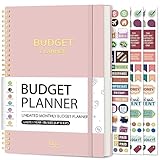


First Sunday of each month, pull the credit card and bank statements. List every recurring subscription. Cancel anything not used in the past 30 days. The audit consistently surfaces 30 to 80 dollars of forgotten spend that redirects directly into the savings transfer.
The rule is small, repetitive, and produces compounding savings across the year that exceed many dramatic budget cuts.
8. The Conscious Spending Plan Rule
Ramit Sethi’s conscious spending plan: spend extravagantly on the small number of things you actually love, cut ruthlessly on the things you do not. Books, travel, dinner with friends in the extravagant bucket if those genuinely matter.
Generic restaurant lunches, impulse retail, forgotten subscriptions in the ruthless bucket. The rule eliminates the guilt of spending on what matters and produces the discipline to cut everything else.
9. The No-Spend Week Quarterly Rule


Once a quarter, a no-spend week. Groceries and essential bills only. No restaurants, no impulse buys, no upgrades. The week surfaces how much discretionary spending was actually optional and produces a reset that recalibrates the spending baseline for the months that follow. Quarterly is sustainable; monthly tends to produce backlash and abandonment.
10. The Quarterly System Review Rule


Every 90 days, the system gets reviewed. Did the automated savings rate hold. Did the 1% increase get implemented at year-rollover. Did the sinking funds cover the actual quarterly expenses. Did the no-spend week land.
The quarterly review keeps the rules responsive to a life that changes and prevents the slow drift back toward the rule-less patterns that produced the original need for the system.
How Long Before the Rules Start Producing Real Savings
The first measurable shift arrives between weeks two and eight. The automated 20% savings transfer has built the first visible balance. The subscription audit has recovered 30 to 80 dollars of forgotten spend. The 24-hour rule has prevented the first few impulse purchases.
The HCOL-adjusted 50/30/20 framework has produced a budget that actually fits the life being lived. Weeks one through two are the discomfort window where the new rules feel like extra friction and the pull back toward the rule-less spending patterns is loudest.
The deeper compounding gains arrive between months three and 24. The emergency fund has crossed the 3-6 month threshold. The 1% annual savings rate increase has scaled the savings rate to 14-19% without ever feeling like a dramatic jump.
The rule of 25 target has begun to feel concrete and the daily savings habit has tied itself to the long-term FI number.
The boring proven rules have done what they always do across enough time: produced the savings the budget abandonment cycle kept preventing in the rule-less years.


Frequently Asked Questions
What is the 50/30/20 rule?
The 50/30/20 rule allocates 50% of after-tax income to needs, 30% to wants, and 20% to savings and debt payoff. It works as a starting frame. In high-cost-of-living areas, the rule needs adjustment to 60/20/20 or 65/15/20 because housing alone often consumes 35-50% of net income.
Does the 50/30/20 rule work for low income?
Not as written. If housing runs at 50% of net income, the standard 50/30/20 collapses. The workable adjustment is closer to 70/15/15 or 75/10/15. The 15% savings floor becomes the non-negotiable. The wants line shrinks accordingly. Subscription bloat tends to be the single largest low-effort cut in low-income budgets.
What is the pay-yourself-first rule?
Pay yourself first means automating a savings transfer before any bill gets paid. The transfer happens the day each paycheck lands, moving 10-20% of net pay to savings and investment accounts before any spending decision can claim the money. The rule eliminates the willpower battle at the source.
What is the rule of 25 for retirement?
The rule of 25 says annual expenses multiplied by 25 equals the financial independence number. 50,000 dollars in annual expenses equals 1.25 million as the FI number. The rule comes from the Trinity Study and the 4% safe withdrawal rate research and provides the long-term target the daily savings habit gets oriented around.
What is the 24-hour rule for purchases?
The 24-hour rule waits 24 hours before completing any non-essential purchase over 50 dollars. The pause lets the impulse-driven dopamine spike fade. A meaningful percentage of items get quietly abandoned during the wait period because the brain re-evaluates them once the spike has passed.
How long does it take for finance rules to produce savings?
First measurable shifts between weeks two and eight as the automation lands and the subscription audit recovers forgotten spend. Real compounding savings between months three and 24 as the emergency fund builds, the 1% annual rate increase scales the savings rate, and the rule of 25 target shifts the daily savings habit toward a concrete long-term number.
Key Takeaways
- Personal finance rules save money when they function as flexible guidelines rather than rigid commandments.
- 50/30/20 is the starting frame. The 20% savings line is the non-negotiable. The wants line flexes around it.
- Pay yourself first by automating 20% of every paycheck before any bill gets paid. The willpower battle is won at the bank.
- The 24-hour rule on non-essential purchases over 50 dollars saves more money than most line-item budget cuts.
- The 1% annual savings rate increase compounds across a decade into a substantial savings rate.
- First shifts between weeks two and eight. Compounding savings between months three and 24.
Final Thoughts
Personal finance rules help you save money when they function as flexible guidelines, get adjusted to the actual conditions of the life being lived, and get encoded as automated transfers at the bank rather than as good intentions in the mind.
Start with the HCOL-adjusted 50/30/20 framework. Pay yourself first with 20% on payday. Run the 24-hour rule on non-essential purchases. Increase the savings rate 1% every January. Build the 3-6 month emergency fund. Set the rule of 25 target.
Run the monthly subscription audit and the quarterly no-spend week. The rules compound across years into the financial life the rule-less version kept circling back to and never quite reaching.
Last update on 2026-10-10 / Affiliate links / Images from Amazon Product Advertising API