

Personal finance books change how you think about money when they solve a specific money problem you already have. Psychology of Money for irrational behavior. I Will Teach You for system design. Total Money Makeover for debt. Match the book to the problem.
You check the savings account on a Sunday morning and the number has barely moved in 18 months. The credit card balance has climbed quietly by 50 dollars at a time. The investment account that was supposed to open in March of last year is still a tab bookmarked on the laptop.
The income is not the problem; the income has actually grown. What is the problem is the unwritten rules running the spending decisions in the background, the rules nobody ever taught explicitly and the rules that quietly produce the same financial pattern year after year.
Personal finance books change how you think about money when they make the unwritten rules visible, name them, and offer a replacement framework that actually fits the version of life you are living. Morgan Housel’s The Psychology of Money makes the case that money decisions are driven by emotion, story, and personal history far more than by spreadsheet logic, and the book gives the reader the vocabulary to recognize the patterns in real time.
Ramit Sethi’s I Will Teach You to Be Rich provides the structural system (automation, conscious spending, investing in low-fee index funds) that makes the rational choice the default choice. Dave Ramsey’s Total Money Makeover offers the debt-elimination framework that has produced more documented debt payoffs than almost any other modern personal finance approach.
The right three or four books matched to the specific money problem you actually have produce more change than a year of skimmed bestseller lists ever does.
Five Personal Finance Books Worth Starting With
Five canonical starting points covering psychology, system design, debt, investing, and the bigger life framing. The numbered list further down expands to 10.





Recommended blogs to read:
- Personal Finance Tips That Changed How I Manage Money
- Personal Finance Rules That Help You Save Money
- Smart Money Habits That Actually Build Wealth
- How to Invest Like the Millionaire Next Door
- Easy Finance Basics to Save More and Spend Less
- books for self improvement that change how you think
Why the Right Three Books Beat the Bestseller List
The personal finance bestseller list rotates roughly the same content year after year, with new packaging around the same handful of evergreen ideas (live below your means, invest consistently, avoid bad debt, build an emergency fund). The books that actually change how readers think about money are not the ones with the loudest marketing; they are the ones that name a specific money pattern the reader already has and provide the replacement framework.
Morgan Housel’s Psychology of Money is successful because it names the emotional drivers behind irrational money decisions. Ramit Sethi’s I Will Teach You is successful because it provides the system that makes the rational choice automatic. Dave Ramsey’s Total Money Makeover is successful because it offers the step-by-step debt-payoff framework the reader can execute starting Monday.
The selection question matters more than the volume question. The reader who picks the right three books matched to the actual money problem (irrational behavior, no system, mounting debt, no investing knowledge, philosophical confusion about what wealth is for) produces dramatically more financial change than the reader who reads 12 personal finance books in a year without ever applying any of them.
The match-the-book-to-the-problem framework is the differentiator between the reader who finishes the year with a meaningfully better financial life and the reader who finishes the year with a longer Goodreads list and the same savings account balance.
The 10 Personal Finance Books That Change How You Think About Money
Ordered by foundational depth. Each book is paired with the specific money problem it solves. Pick the book that names your version of stuck.
1. The Psychology of Money by Morgan Housel


Solves the irrational-behavior problem. Housel’s central argument is that money decisions are driven by emotion, story, and personal history far more than by spreadsheet logic. The book provides 20 short chapters that name the specific psychological patterns behind common money mistakes. Start here if the problem is that you already know the math but keep making the wrong choices anyway.
2. I Will Teach You to Be Rich by Ramit Sethi


Solves the system-design problem. Sethi’s six-week system covers automation, conscious spending, investing in low-fee index funds, and the conscious-spending plan that lets you spend extravagantly on what you love while cutting ruthlessly on what you do not.
The book is the practical operating system the Psychology of Money frameworks need to live inside. Start here if the problem is no structure.
3. The Total Money Makeover by Dave Ramsey


Solves the debt problem. Ramsey’s seven Baby Steps (1,000 dollar starter emergency fund, debt snowball, three to six months expenses saved, invest 15% of income, college funding, pay off the mortgage, build wealth and give) is the most documented debt-elimination framework in modern personal finance.
Start here if the problem is mounting debt you do not have a clear plan to escape.
4. The Simple Path to Wealth by JL Collins

Solves the investing-confusion problem. Collins’s argument: high savings rate plus low-fee total market index investing plus decades of consistency equals financial independence. The book strips away the stock-picking, market-timing, and active-management noise and provides the simplest possible investing playbook. Start here if the problem is paralysis about how to actually invest.
5. Die With Zero by Bill Perkins

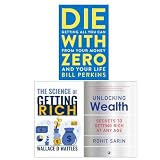
Solves the philosophical-confusion problem. Perkins argues that the goal of personal finance is not maximum wealth at death but maximum life experience across the years when you have the health and the energy to actually use the money.
The book reframes the entire purpose of saving and challenges the default accumulation script. Start here if the problem is unclear philosophy about what the money is for.
6. Rich Dad Poor Dad by Robert Kiyosaki


Solves the cash-flow-versus-net-worth problem. Kiyosaki’s central distinction (assets put money in your pocket, liabilities take money out) reframes the definition of wealth from net worth to passive cash flow. The book has been criticized for some of its specifics but the foundational reframe has changed how millions of readers think about income streams.
7. Broke Millennial by Erin Lowry


Solves the beginner-overwhelm problem. Lowry’s book is written specifically for readers in their 20s and 30s starting from minimal financial knowledge. The book covers credit scores, debt payoff, building savings, and the difficult money conversations (with partners, friends, family) other books skip. Start here if the problem is feeling overwhelmed by where to even begin.
8. Your Money or Your Life by Vicki Robin
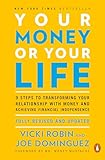


Solves the time-versus-money problem. Robin’s framework calculates your real hourly wage and then asks whether each purchase is worth the actual life hours you traded for it. The book is the spiritual ancestor of the FIRE (Financial Independence Retire Early) movement and reframes spending decisions around the question of life energy traded.
9. The Automatic Millionaire by David Bach


Solves the willpower-fatigue problem. Bach’s central argument: automation eliminates the daily willpower battle by moving the money out of checking before any spending decision can claim it. The book is short, direct, and produces immediate practical changes the reader can implement at the bank Monday morning. Start here if the problem is good intentions that never become consistent saving.
10. The Millionaire Next Door by Stanley and Danko


Solves the appearance-versus-reality problem. Stanley and Danko’s research on actual millionaires (the Toyota Corolla in the driveway, the modest house, the consistent saving across decades) challenges the cultural assumption that wealth looks like luxury cars and expensive homes. The book is the foundational research text on the actual behaviors that produce long-term wealth.
How Long Before the Books Start Producing Real Financial Change
The first measurable shift arrives between weeks two and eight. The first book has been finished. The first framework has been applied (the automation set up at the bank, the first conscious-spending category written, the first debt-snowball balance attacked). The savings account number has moved for the first time in months.
The investment account has actually been opened. Weeks one through two are the discomfort window where the new system feels like extra work and the pull back toward the old reactive money patterns is loudest.
The deeper compounding gains arrive between months three and 24. The automated savings rate has built a visible buffer. The debt snowball has eliminated the smallest two balances. The investment account has experienced its first quarterly compounding moment. The Psychology of Money frameworks have begun to surface as the internal vocabulary the money decisions now use.
The match-the-book-to-the-problem reading practice has produced the financial shift the previous decade of scattered money advice kept promising and never quite delivering.


Frequently Asked Questions
What is the best personal finance book?
There is no single best book. The right book is the one that solves the specific money problem you actually have. Psychology of Money for irrational behavior. I Will Teach You for system design. Total Money Makeover for debt. Simple Path to Wealth for investing confusion. Match the book to the problem.
Which finance book should I read first?
If the problem is irrational money behavior, start with The Psychology of Money. If the problem is no system, start with I Will Teach You to Be Rich. If the problem is mounting debt, start with The Total Money Makeover. If the problem is investing paralysis, start with The Simple Path to Wealth.
Do personal finance books actually help?
The right book read carefully and applied produces real shifts in money behavior. The wrong book or any book read passively without setting up the automation, the budget, or the investment account produces almost nothing.
The variable is not the book itself but the matching of the book to a real problem and the active execution of the framework starting Monday.
Are these personal finance books for beginners?
Several of them are written specifically for beginners. Broke Millennial is calibrated for readers in their 20s and 30s starting from minimal knowledge. I Will Teach You to Be Rich provides a clear six-week starter system. Total Money Makeover offers the seven Baby Steps as a structured beginner pathway.
How do I read personal finance books effectively?
Twenty to thirty minutes of focused reading daily. Take notes in a dedicated finance journal. Identify one specific framework per book to implement this week (the automation, the conscious-spending category, the first debt-snowball balance). Review the implementation at the Sunday weekly review.
How many personal finance books should I read?
Three to five carefully chosen books across a year, with frameworks actually implemented, produces more financial change than 15 books skimmed without action. The selection question and the execution question matter more than the volume question.
Key Takeaways
- Personal finance books change how you think about money when they are matched to a specific money problem you already have.
- The Psychology of Money for irrational behavior. I Will Teach You for system design. Total Money Makeover for debt.
- Simple Path to Wealth for investing confusion. Die With Zero for philosophical confusion about what wealth is for.
- Three to five carefully chosen books beat 15 books skimmed without action. Execution matters more than volume.
- Twenty to thirty minutes of focused reading, notes in a finance journal, one framework implemented per book.
- First shifts between weeks two and eight as automation lands. Compounding gains between months three and 24.
Final Thoughts
The personal finance books that change how you think about money are the ones matched to the specific money problem you actually have. Psychology of Money if irrational behavior is the pattern. I Will Teach You if no system is the issue.
Total Money Makeover if debt is the immediate fire. Simple Path to Wealth if investing confusion is the block. Die With Zero if the bigger question is what the money is for. Pick the book that names your version of stuck.
Read it carefully. Implement one framework this week. The boring 20-minute daily reading plus the actual execution produces the financial change every bestseller list keeps promising and almost never delivering.
Last update on 2026-10-09 / Affiliate links / Images from Amazon Product Advertising API